Hanbok Korean Traditional Dress: Why a Heritage Garment Has Staying Power

hanbok Korean traditional dress editorial guide

Hanbok is Korea’s traditional dress: a heritage garment associated with a distinctive visual language of colour, line and proportion, rather than a single everyday uniform or a disposable online costume. The hanbok Korean traditional dress remains familiar to international audiences because it can move between cultural education, community activity, heritage-site visits and highly shareable photographs without losing its central association with Korean identity.

hanbok Korean traditional dress editorial guide
Original editorial illustration for hanbok traditional Korean dress palace courtyard editorial photo – Korea Culture Press – AI-generated with gpt-image-2 – OpenAI gpt-image-2

That visibility can make hanbok look like a fresh social-media craze. The available material points to something more durable, but also more specific. It shows people discussing hanbok communities, including hanbok styling in Korean-culture programmes, and photographing visits to Gyeongbokgung in hanbok. It does not identify one platform-wide challenge, a confirmed spike in participation, or a verified 2026 viral format. Hanbok’s staying power is better understood as cultural continuity meeting contemporary image-led discovery.

What makes hanbok Korean traditional dress?

Encyclopaedia Britannica’s entry on hanbok gives the essential starting point, calling it traditional Korean dress and characterising it through vibrant colours and simple lines that reflect a harmony with nature. That compact description explains why the clothing registers so strongly even in a fast-moving feed: its silhouette is legible at a glance, and colour is often a major part of the image.

The word “hanbok” should not be used as if it describes one fixed outfit with one approved appearance. It is a broad cultural term for Korean traditional dress, and what viewers encounter under that label can differ according to setting, purpose and styling. A classroom presentation, a community gathering, a heritage photograph and a fashion-oriented post may all foreground different aspects of the garment. Treating every image as a museum reconstruction would be inaccurate; treating every image as mere dress-up would be equally reductive.

Britannica’s phrasing matters because it places the garment first in the category of traditional dress, not in the narrower categories through which many overseas viewers first meet it: travel content, K-culture programming or styled photography. Those encounters can be valuable entry points. They should not replace the more basic fact that hanbok carries heritage meaning before it becomes content.

Why its visual language travels so well online

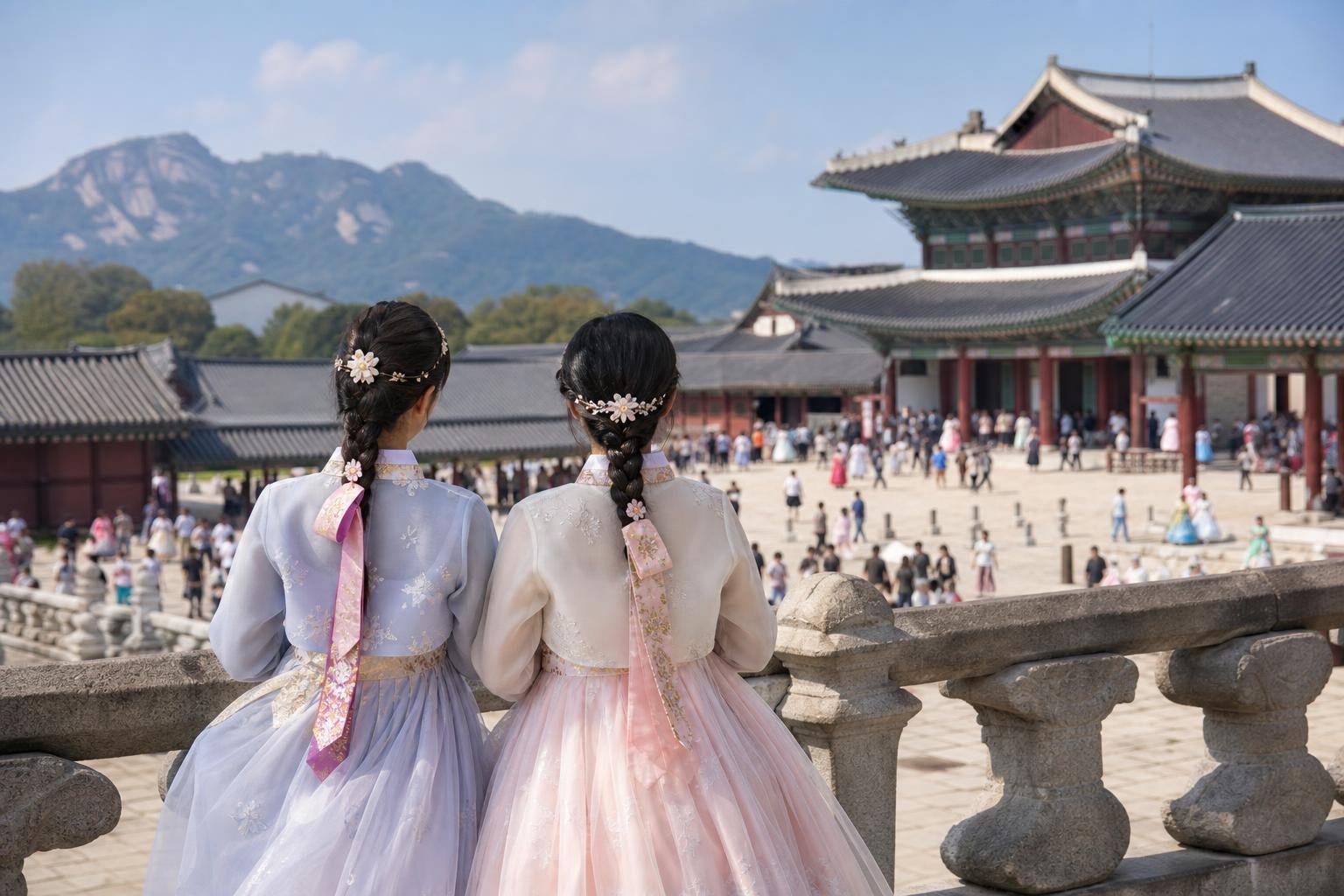
Original editorial illustration for Gyeongbokgung visitors hanbok licensed photo
Original editorial illustration for Gyeongbokgung visitors hanbok licensed photo – Korea Culture Press – AI-generated with gpt-image-2 – OpenAI gpt-image-2

Simple lines and strong colour contrast give hanbok a clarity that photographs and short video often reward. A viewer does not need to know the garment’s full cultural background to recognise that it differs from ordinary contemporary streetwear. That immediate readability helps explain repeated online appearances, but it should not be confused with proof that hanbok is newly popular in every context.

Social platforms tend to separate a garment from the occasion in which it is worn. A still image may emphasise colour against palace architecture; a brief reel may focus on movement or a styling transition; an educational post may place the same clothing beside food, music or calligraphy. The format changes what an audience notices. It does not automatically change what hanbok is.

For English-language audiences, the most useful response is to keep two ideas in view at once: the visual appeal is real, and the cultural frame is not optional background decoration. Calling hanbok “Korean traditional clothing” is more precise than calling it an exotic costume. It locates the garment within a living national cultural vocabulary without claiming that every Korean wears it in ordinary daily life.

From cultural programmes to the palace photograph

The search material shows hanbok appearing in organised cultural contexts as well as individual posts. An Instagram reel shared by Upwordsmagazine describes a Culture Academy programme with 12 Korean cultural fields, listing hanbok beside K-food, K-pop, samulnori, K-beauty, calligraphy, literature, traditional crafts and taekwondo. Its significance is modest but clear: hanbok is being presented as one component of a broader cultural curriculum, rather than as an isolated visual novelty.

A separate Toi Plus Instagram reel similarly places “Hanbok styling” within a menu of modern lifestyle and trends activities that also includes K-pop vocal and dance training, skincare and makeup, and culinary arts. This is an example of how contemporary programming can frame traditional dress through participation. Styling becomes a way into the subject, especially for learners who already approach Korean culture through popular music or beauty content.

Meanwhile, a Tastes SEOUL Good Facebook post surfaced in search with the phrase “Gyeongbokgung hanbok photo.” The brief result does not establish the details of a visit, but it captures a widely recognisable contemporary encounter: heritage architecture and traditional dress becoming part of a personal travel image. The palace photo is not evidence that hanbok has become ordinary tourist clothing throughout Korea. It is evidence that the pairing is a meaningful and visible cultural image.

What the posts say about platform behaviour

The most direct social-media signal in the supplied material is an Instagram reel from sundae.school, dated July 20, 2026 in the search result. Its description says Korean culture has been “on the up and up” and refers to bringing a “Hanbok community” forward while spreading awareness about Korean culture. The phrasing is not a measurement of audience size. It is, however, an explicit example of a creator or organiser treating hanbok as a community-building subject.

That distinction matters. A post about awareness has a different purpose from a trend clip built around replication. Community content asks people to recognise, learn about or join a cultural interest. Styling content invites attention to presentation. A Gyeongbokgung photograph turns a visit into a memory and a shareable image. These forms can overlap, but they should not all be folded into the word “viral.”

International circulation also changes the balance of what is visible. A viewer may encounter a finished image before seeing the cultural programme, the local setting or the person who chose to wear the garment. Captions can compress a complex context into terms such as “Korean aesthetic” or “palace look.” Those labels may help an unfamiliar audience locate the post, but they flatten hanbok when they become the whole explanation.

Translation is not the same as explanation

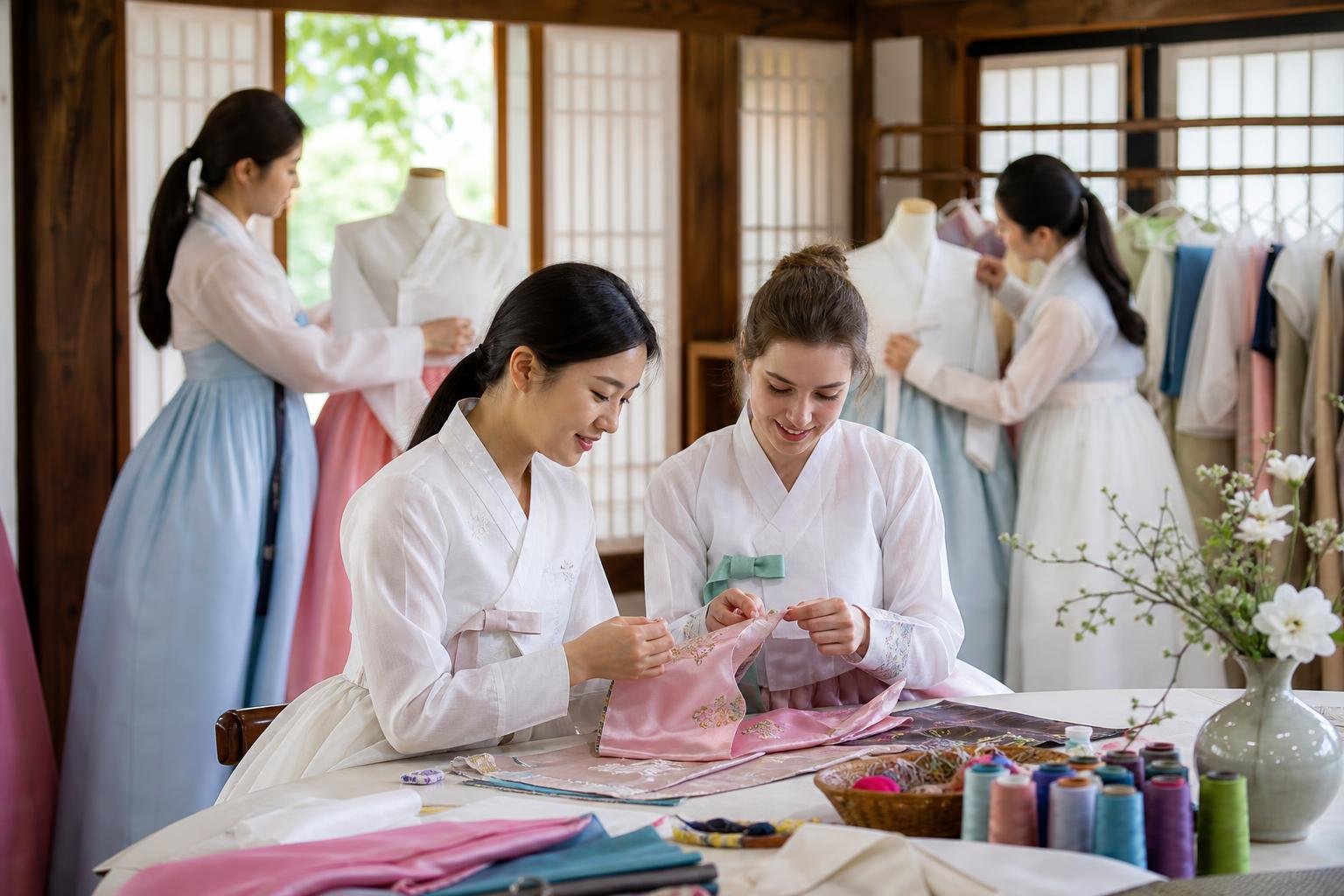
Original editorial illustration for Korean cultural education hanbok workshop photo
Original editorial illustration for Korean cultural education hanbok workshop photo – Korea Culture Press – AI-generated with gpt-image-2 – OpenAI gpt-image-2

Britannica’s title renders hanbok as “Korean dress,” which is useful as a quick English label. But a short translation cannot carry every association that Korean speakers, practitioners or participants may bring to the term. In particular, it should not be assumed that “hanbok” simply means a costume for a themed photograph, or that every contemporary styling decision is a claim of historical accuracy.

The supplied research contains no Korean-language primary post, interview or detailed translation discussing how participants themselves define the term. That is the precise limit of this record. It means broad statements about a Korean public consensus, the intentions behind individual outfits, or changes in Korean-language usage would go beyond what these sources establish. An English-language description can be clear without pretending to settle those questions.

How to participate without turning heritage into a prop

Participation is not inherently superficial. The Culture Academy and styling references show that hanbok can be included in structured learning and cultural activities, while the Gyeongbokgung reference suggests that visitors value the garment in a heritage setting. The useful question is not simply, “May someone take a photo?” It is what the photo, caption and setting communicate about the clothing.

  • Name the garment accurately. “Hanbok” or “Korean traditional dress” is clearer than generic labels that erase its origin.
  • Keep the place in the picture. If a palace, cultural class or event matters to the experience, mention it rather than presenting the clothing as a placeless visual trend.
  • Separate styling from historical claims. A contemporary interpretation may be creative, but it should not be described as an authoritative reconstruction without support.
  • Credit people and programmes where possible. Community organisers, cultural educators and hosts do more than supply a backdrop for an image.

These are not rules requiring a viewer to become an expert before engaging. They are ways of resisting the most common online shortcut: allowing a striking garment to stand in for an entire culture. A respectful caption can be brief. It simply needs to preserve the connection between the clothing and Korea rather than turning that connection into vague scenery.

Commercial influence is visible, but not quantified here

Heritage locations, learning programmes and photo-friendly styling naturally create commercial opportunities, from experiences to classes and related services. Yet the supplied sources do not document specific hanbok-rental companies, prices, booking policies, sales figures or a market boom. The Gyeongbokgung photo reference supports a narrower observation: a photograph in hanbok at a major cultural site is part of the contemporary image environment around Korean travel.

That restraint improves the story. Commercial activity can help people access garments and experiences, but access is not the same thing as cultural understanding. Nor does a photogenic visitor practice automatically tell us how people in Korea relate to hanbok across family events, formal occasions, education or daily life.

Why this is not a documented viral trend

The word “trend” is useful only when it describes something observable. Here, the observable material is a cluster of references: a July 2026 community-oriented reel, posts that include hanbok in cultural and styling programmes, and a social reference to a Gyeongbokgung photograph. They show continuing discoverability across social and cultural spaces. They do not supply reach figures, replication counts, a shared hashtag history, a start date for a challenge or independent reporting on a surge.

Calling that cluster a viral moment would inflate the record. It would also obscure what makes hanbok different from an algorithmically born fashion microtrend. A microtrend can depend on a particular sound, influencer or editing convention. Hanbok does not need a single feed format to remain visible because its reference point is heritage. Platforms may amplify an image, but they did not create the garment’s significance.

This distinction protects against another familiar error: recycled clips and new captions can make an older visual practice appear newly ascendant. Without traceable original posts, reliable dates and comparable measures of engagement, a claim of explosive growth should remain a question, not a headline fact.

Staying power comes from context, not a hashtag

The hanbok Korean traditional dress has staying power because it can be encountered through more than one route. Britannica anchors it as traditional dress. Cultural programmes position it among other Korean arts and practices. Community-oriented posts give it a social purpose. Gyeongbokgung imagery gives visitors a concrete visual setting. Each route is partial, but together they explain why hanbok remains visible without requiring a manufactured claim of virality.

For an English-speaking audience, that is the durable takeaway. Hanbok can be beautiful in a photograph and meaningful in a cultural programme at the same time. The responsible reading of its online presence is neither to dismiss it as tourism content nor to assume every image reveals an ancient, unchanged custom. It is to recognise a heritage garment meeting contemporary modes of participation – with the cultural origin kept in the frame.

Sources and verification

Frequently Asked Questions

What is hanbok?

Hanbok is the traditional dress of Korea. Britannica describes it as characterised by vibrant colours and simple lines that reflect harmony with nature. The term should be understood as heritage clothing, not as a single fixed costume or a label for every contemporary Korean outfit.

Is hanbok a viral social-media trend?

The supplied posts show ongoing visibility in community, cultural-programme, styling and Gyeongbokgung-photo contexts. They do not provide verified reach figures, a platform-wide challenge, a shared hashtag timeline or evidence of a single 2026 viral surge. Its online presence is clearer than any claim of virality.

Why do visitors wear hanbok at Gyeongbokgung?

A Facebook search result specifically references a Gyeongbokgung hanbok photo, indicating that traditional dress and palace imagery are linked in contemporary travel sharing. The material does not establish rental prices or visitor numbers, but the pairing gives participants a visible connection between clothing and heritage place.