At a glance: MUJI minimalist style comes into focus through the named people, products, dates, and context that can be supported.
Table of contents

A long-term tester told The New York Times’ Wirecutter that MUJI nail clippers remained less dull than new drugstore clippers after three years of ownership. It is a small, practical detail, but it neatly explains why a bare search for MUJI can lead in several directions at once: clothing-minded minimalism, home and desk objects, personal-care tools, and a broader preference for things that earn their place through use.
MUJI minimalist style is best understood as an aesthetic of reduction, not a single outfit formula. The idea is to lower the visual volume: fewer obvious logos, less ornamental clutter, calmer color relationships, and objects or garments that do not demand to be the main event. It can read as fashion when applied to a pared-back outfit, but it is equally a lifestyle-design sensibility. That distinction matters for anyone arriving with a one-word search and expecting either a fashion label, a grooming recommendation, or a complete design philosophy.
The available references point to all three. A non-official Design Docs video glosses “Mujirushi Ryohin” as “no-brand quality goods” while discussing the company’s design history, and another non-official video characterizes MUJI as a Japanese retail company built around reducing branding rather than amplifying it. Those are useful signposts to the name and its reputation, not official brand statements or proof of a specific current collection.
MUJI minimalist style begins with visual restraint
Minimalism is often confused with emptiness. In clothes, that misunderstanding produces outfits that look unfinished: a blank top, blank pants, blank shoes, then a vague hope that the result will register as sophisticated. The more useful reading is disciplined editing. A quiet outfit still needs proportion, texture, and a clear reason for each piece to be there.
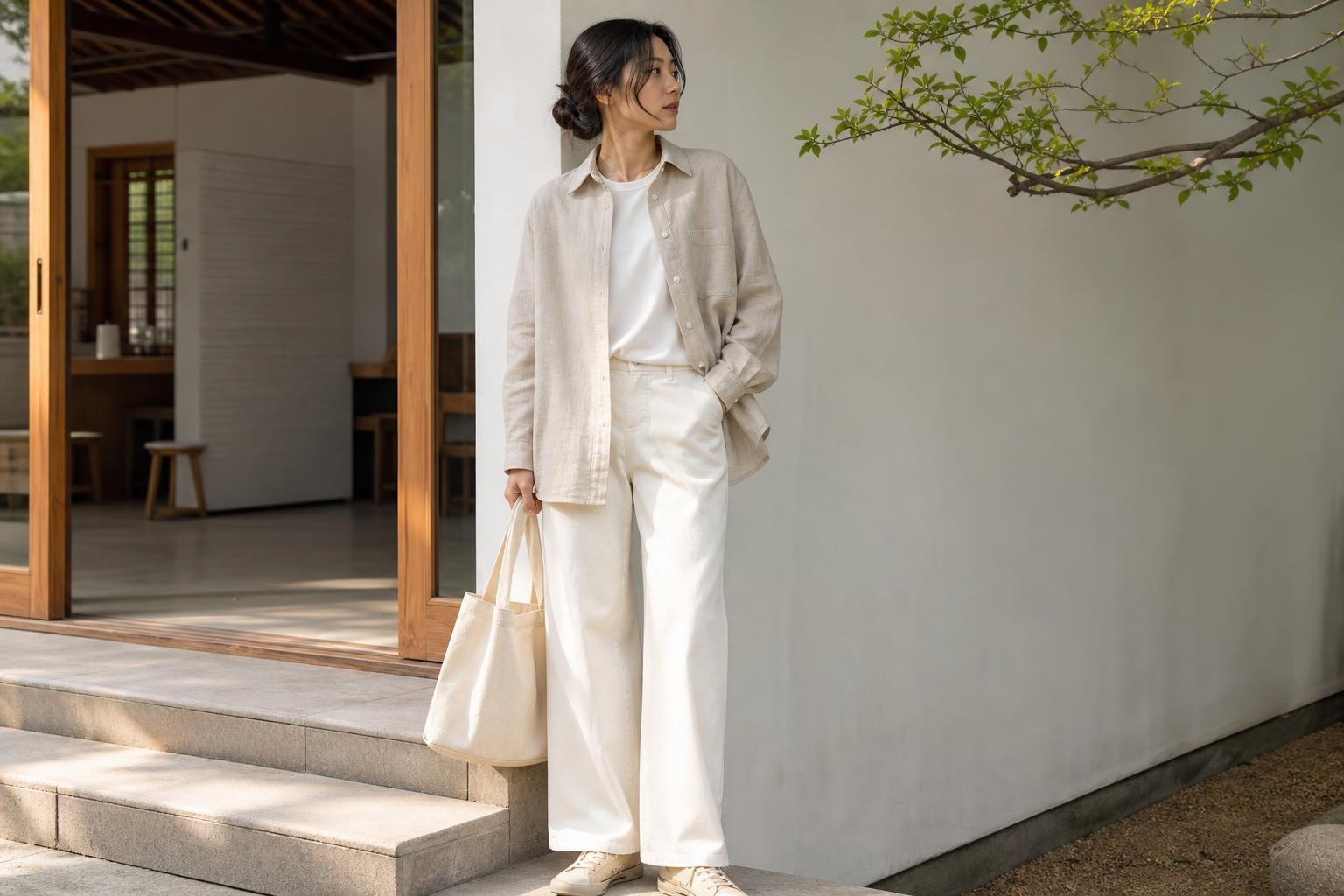
Applied to dressing, the MUJI reference point suggests a look that lets shape do more of the work than branding. Think of a relaxed top balanced by a straighter lower half, or a trim layer paired with a roomier trouser. The point is not to imitate an imagined uniform or chase a severe all-beige mood. It is to keep the eye moving through proportion instead of through a giant logo, a conspicuous print, or a pileup of competing accessories.
Color can work the same way. A narrow family of off-white, charcoal, navy, olive, brown, or washed blue tends to look more intentional than a collection of unrelated “basics.” These are styling suggestions, not claims about a current MUJI palette. What makes them relevant is their low-contrast effect: they allow hem length, shoulder line, sleeve volume, and fabric surface to become visible.
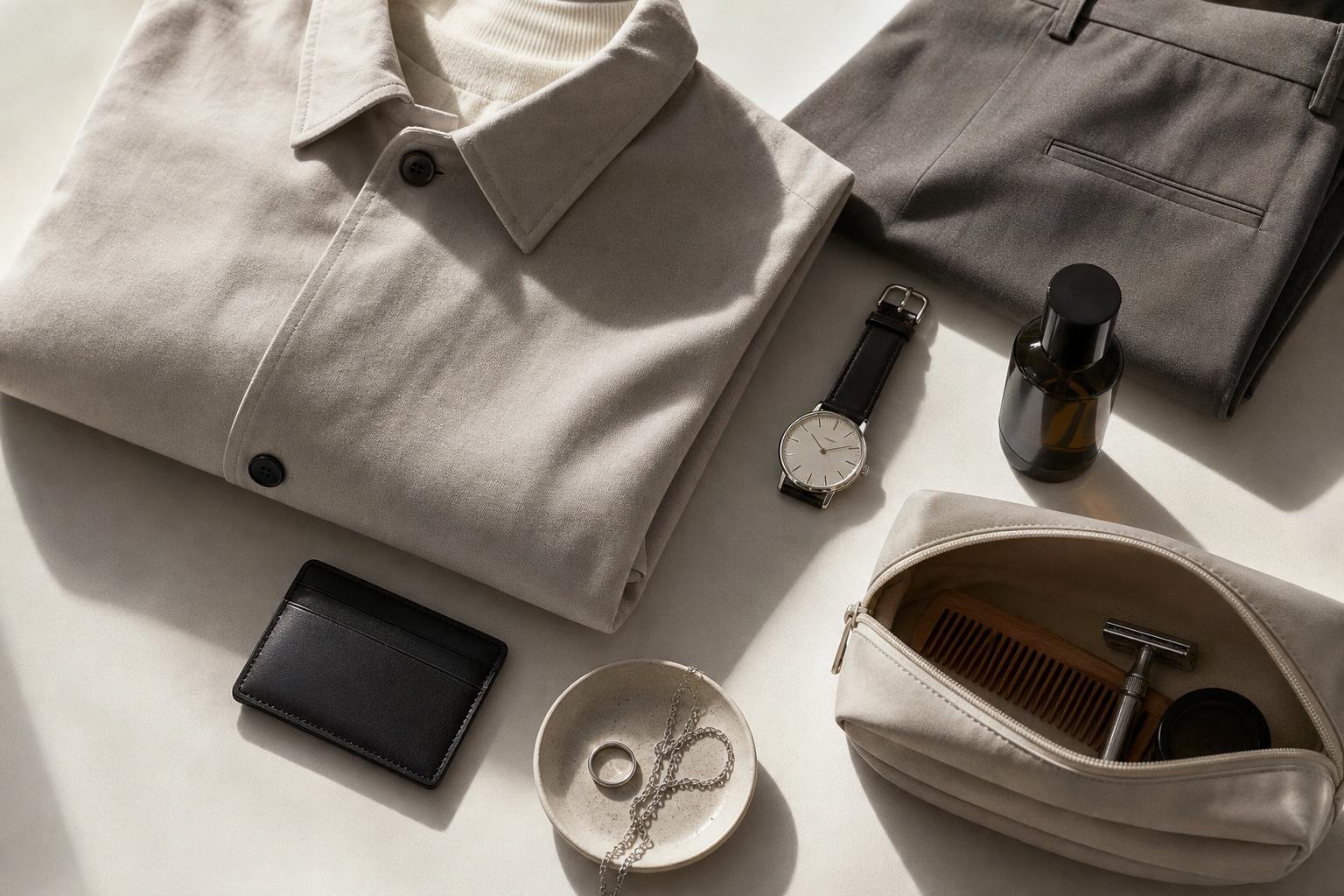
Texture is the quiet outfit’s insurance policy. If every item is smooth, dark, and close-fitting, restraint can turn flat. Introduce one tactile note: a knit against crisp cotton, brushed suede beside a plain shirt, ribbing under a clean overshirt, or a canvas tote with otherwise refined separates. Keep the contrast controlled. One textured surface is often enough to give a low-logo look depth without turning it into a costume of “minimalism.”
It is a lifestyle reference, not a claim about one current fashion look

The word MUJI is broad in practice. Wirecutter’s recent mention of nail clippers places the name in a grooming-tools conversation, while an August 2026 article from Fashion and Marketing Talks discusses MUJI through minimalism, sustainability, and support for local communities. The latter is secondary commentary, not an official sustainability report, so it is best read as one writer’s framing of the brand’s strategy rather than a verified list of present-day programs or product specifications.
That range is precisely why MUJI can appeal to people who care about style but do not want every purchase to be “fashion.” A well-designed everyday item can support the same personal aesthetic as a well-proportioned outfit: visually calm, easy to reach for, and free of needless theatricality. A grooming tool is not an accessory, and a home object is not a jacket, but all can contribute to a routine that feels edited rather than overloaded.
There is also a useful boundary here. Reduced branding is an approach, not a guarantee that every item is unmarked, neutral, inexpensive, natural-fibered, or universally flattering. Nor does a minimalist brand identity tell you whether a particular shirt will suit humid weather, whether a trouser will accommodate fuller thighs, or whether an accessory will hold up to daily commuting. Those are item-level questions. They require current product pages, fabric composition, measurements, care instructions, and in-person fit checks—details not established by the references here.
For now, treat the name as a design filter. It asks a productive question before you buy: Would I still want this if its label were hidden? If the answer is yes because the cut works, the material feels good, or the tool solves a recurring annoyance, you are using the idea more intelligently than someone purchasing a “minimalist” item simply because it is plain.
How to translate the mood into a wearable outfit
The strongest version of this aesthetic is wearable because it acknowledges real conditions: heat, transit, office air-conditioning, laundry, body shape, and the fact that most people need clothes to function across more than one setting. Start with the silhouette, then decide how polished you want it to feel.
For a relaxed weekday
- Choose one easy top layer with a clean line—an unstructured shirt, lightweight overshirt, or simple knit—and wear it over a close-to-the-body base layer.
- Keep the bottom half straight or gently tapered if the upper layer is roomy. If the top is cropped or fitted, a fuller trouser can restore balance.
- Limit the color story to two main neutrals plus one softened accent, such as faded blue, muted green, or warm rust.
- Use one practical carryall, watch, or simple belt rather than several statement accessories competing for attention.
This formula works especially well when you want to look put together without looking overdressed. It is not tied to a gender, age, or single body type because the critical adjustment is proportion. A shorter frame may prefer a higher visual waist or a shorter outer layer; a taller person can often carry a longer shirt hem or wider trouser leg. The minimalist principle remains the same: create a deliberate outline, then remove the extras that blur it.
For heat and high humidity
Do not confuse neutral colors with climate readiness. A dark, dense, long-sleeved outfit may look sleek in a photo and feel miserable outdoors. In warm, humid conditions, prioritize air space around the body, lighter-weight construction, and pieces that can be removed without disrupting the outfit. A soft, light-colored shirt over a sleeveless or short-sleeved base can give you visual layering without trapping heat. Cropped ankle length, open footwear where appropriate, and a less structured bag can also make a pared-back look feel easier rather than precious.
Material determines comfort more than a minimalist label does. Check the fiber content and care label before assuming an item will breathe, resist wrinkles, or survive frequent washing. A simple-looking garment made from a high-maintenance fabric can be the opposite of useful everyday design. If you are building a wardrobe on a budget, spend more attention on washability and repeat wear than on whether every piece matches a carefully curated online mood board.
For a sharper evening version
Minimalism can move into dinner, a gallery opening, or a low-key event by shifting finish rather than adding decoration. Keep the base simple, then choose one element with presence: a cleaner shoe, a structured jacket, a compact leather-like bag, a metal cuff, or a more sculptural earring. The rest should stay quiet enough to let that one element register.
Hair and makeup benefit from the same edit. The goal is not “no effort.” It is a deliberate focal point. A smooth bun or a naturally defined texture can support the outfit; so can clean skin with a stronger lip, or a softly blurred eye with bare-looking lips. Avoid making every detail equally loud. If the jewelry catches the light, keep makeup fresh. If the lip is saturated, let the accessories recede. Minimalist style is often most convincing when one decision is clear and the rest are calm.
The no-brand idea is not the same as looking anonymous
The phrase “no-brand quality goods,” used in the Design Docs video description, can sound like a command to erase personality. It does not have to mean that. It can mean moving identity away from instant recognition and toward choices that reveal taste slowly: a pleasing proportion, a favorite faded color, a worn-in shoe, a good haircut, a bag that becomes more useful with time.
In that sense, MUJI minimalist style has more room for individuality than its reputation sometimes suggests. A person who loves maximal jewelry can still use it as a base: wear the jewelry with a simple shirt and clean trousers so it has space. Someone devoted to color can work with a single saturated knit against quiet neutrals. A vintage enthusiast can pair one expressive secondhand piece with plain supporting layers. The rule is not “be invisible.” The rule is “give the eye a hierarchy.”
That hierarchy also protects against trend-driven overspending. Buying five nearly identical neutral items rarely creates a better wardrobe; it often creates a more expensive version of indecision. Before adding another plain layer, ask what role it fills. Does it solve a temperature problem? Bridge casual and polished settings? Work with at least three pieces already in rotation? Replace something worn out? If it has no answer, its lack of a logo does not make it necessary.
Search by need, not by the mood board

A one-word search can conceal very different intentions. If you want to investigate garments, use “MUJI clothing” and add the category you need—shirts, trousers, outerwear, socks, or bags—then verify the current retailer, size chart, fabric details, and availability in your location. If the appeal is domestic calm, search for home goods, storage, stationery, or minimalist interior ideas. If you arrived after hearing about the tool praised in Wirecutter’s review, search specifically for “MUJI nail clippers” rather than assuming a fashion article will answer a grooming-product question.
For sustainability, seek out dated official documentation or product-level information before treating broad minimalism as proof of a particular environmental outcome. The Fashion and Marketing Talks piece makes sustainability part of its discussion, but a brand philosophy and a measurable product claim are not interchangeable. The same caution applies to fashion: this article does not identify a confirmed current apparel collection, campaign, Korean-market assortment, celebrity partnership, price point, or material standard.
That restraint is useful, not limiting. It leaves you with a sharper way to shop: choose a piece or object for its proportion, purpose, care needs, and ability to work with your actual life. The best MUJI-inspired move is not an all-neutral makeover. It is one quieter decision—perhaps a cleaner bag, a better-fitting overshirt, or a single well-made grooming tool—that makes the rest of your routine feel less crowded.
Official Sources and Verification
- The 2 Best Nail Clippers of 2026 | Reviews by Wirecutter — Established reporting: After three years of owning them, one long-term tester reported that the Muji nail clippers are “still not as dull as brand-new drugstore ones.”. Source: The New York Times (6 days ago)
- MUJI, sustainability, minimalism, supporting the locals — Supporting source: Discover how MUJI's sustainability strategy is based on minimalism and supporting locals. Learn about MUJI's commitment to sustainability, minimalism, … Source: Fashion and Marketing Talks (Aug 22, 2026)
- How Muji Built a Global Brand by Rejecting Branding — Supporting source: Mujirushi Ryohin (no-brand quality goods) This video explores Muji's design history,. Source: YouTube · Design Docs
- The Strategy That Made Muji Billions Without Branding — Supporting source: MUJI is a Japanese retail company built around an unusual idea: removing branding instead of amplifying it. In this video, we break down MUJI's “no-brand” … Source: YouTube · TokyoPaul
Frequently Asked Questions
What does MUJI mean in the context of minimalist style?
A non-official Design Docs video describes “Mujirushi Ryohin” as “no-brand quality goods.” In style terms, MUJI is commonly associated with restrained design, reduced visual branding, and everyday usefulness rather than loud logo-driven dressing.
Is MUJI only a fashion brand?
No. The available references point to a broader retail and lifestyle association: one recent Wirecutter review discusses MUJI nail clippers, while other commentary focuses on minimalism and sustainability. Search by the category you need, such as clothing, accessories, home goods, stationery, or grooming tools.
How can I make MUJI minimalist style look personal rather than plain?
Build a quiet base with intentional proportion, then add one point of character: a textured fabric, a faded color, a sculptural earring, a distinctive shoe, or a stronger lip. Keep the rest of the look edited so that choice has room to stand out.
Explore more K-culture stories
RECOMMENDED SITE
Planning a trip to Korea?
Discover practical Korea travel guides, local tips and destination ideas at KoreaSpot.