K-pop influence on North Koreans cannot be measured in the way it is measured anywhere else. There are no reliable sales figures, streaming totals, fan-club counts, concert attendance records, public charts or representative surveys that can show which South Korean artists are heard inside the country, by whom, or with what effect. That does not mean South Korean pop culture is irrelevant there. It means that a responsible answer begins with a narrower conclusion: exposure to South Korean media may shape some people’s tastes and ideas, but claims about a mass K-pop audience, a particular group’s popularity, or culture-wide political change are usually much stronger than the public evidence allows.
Table of contents
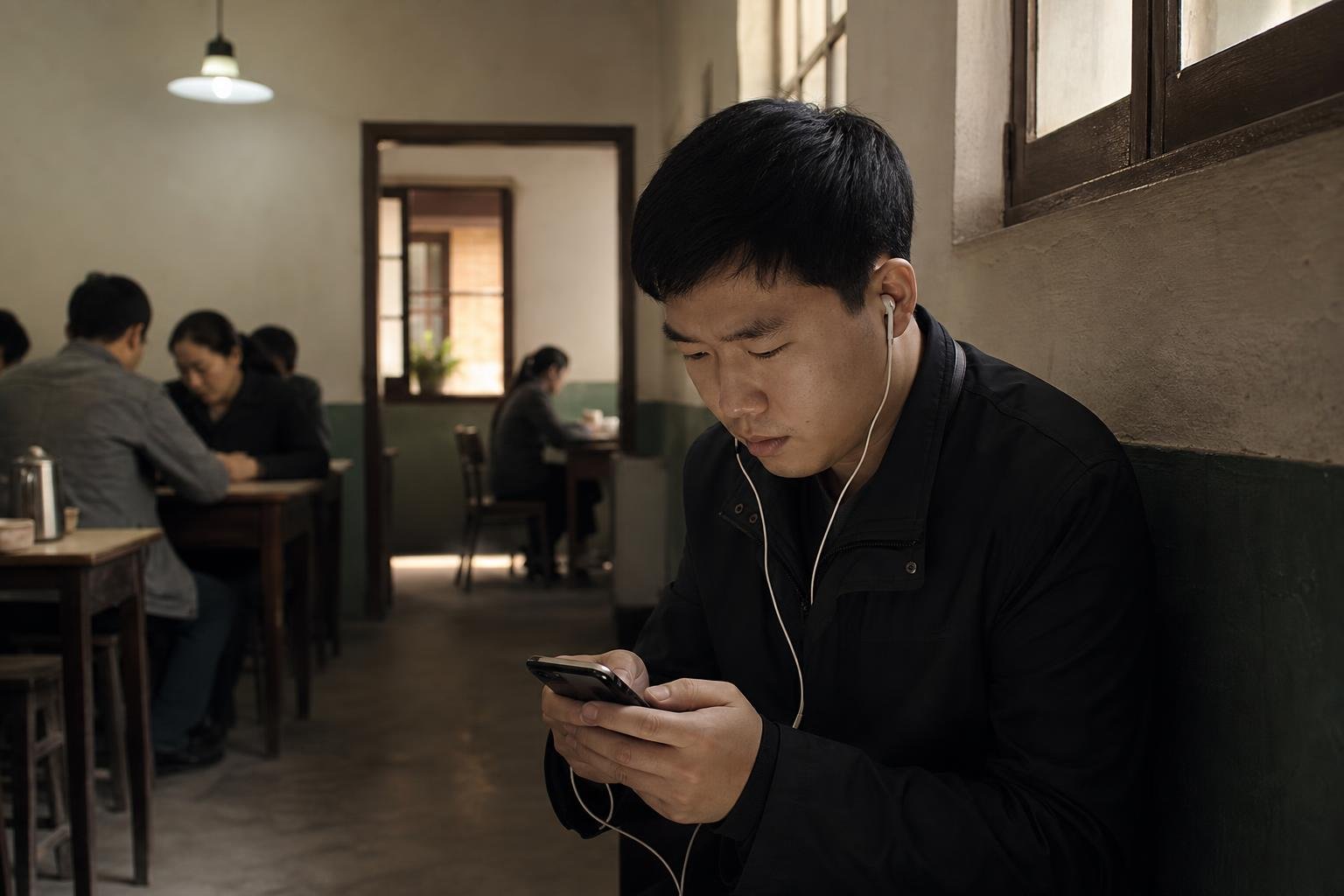
The distinction matters because K-pop is often used as shorthand for a much larger phenomenon. When people say North Koreans are consuming K-pop, they may mean idol music, but they may also mean dramas, variety shows, films, South Korean speech patterns, celebrity fashion, dance routines or entertainment generally. Those forms travel differently, create different kinds of attachment, and cannot be treated as one audience behavior. A viewer who sees a drama episode on a copied storage device is not necessarily following a music act, learning song lyrics, buying merchandise or participating in the fan practices familiar in Seoul, Los Angeles or Jakarta.
Evidence limitation: the supplied research results contain no directly relevant reporting, academic study, official data or firsthand interview documenting North Korean listening habits, named K-pop songs, artists, releases, performances or audience reactions. The results concern the international K-pop business, including album lists, releases and overseas events, rather than cultural reception inside North Korea. They cannot establish domestic popularity there.
Why K-pop influence on North Koreans is difficult to verify
North Korea’s media environment makes ordinary cultural reporting impossible. In an open music market, popularity can be tested against ticket sales, platform data, radio rotation, press interviews, social posts and visible fan activity. None of those measures offers a dependable public record in this case. An absence from an official chart would reveal nothing about private exposure; a viral claim outside the country would not reveal how broadly it travelled within it.
That gap also changes how testimony should be read. Accounts from people who have left North Korea can be deeply valuable: they may describe the formats they encountered, the social settings in which media circulated, the precautions they took, and why South Korean entertainment felt distinctive. But a testimony is an account of a place, time, route and personal network. It is not a national sample. Access can differ sharply according to geography, household resources, official position, age, work, family connections and the changing intensity of enforcement.
Time is especially important. A person describing media consumption before leaving the country may be reporting an experience from years earlier. The file formats, technologies, distribution routes and political conditions of that period may not match those of the present. Repeating an old account under the label of a current K-pop trend can turn a specific memory into an inaccurate claim about an entire population.
Nor should access be confused with enthusiasm. Someone may watch or hear South Korean material out of curiosity, for language practice, because it is available through a trusted contact, or because it offers a contrast with domestic programming. Another person may dislike it, avoid it, or have no practical access at all. Cultural influence is not a switch that turns on once foreign media crosses a border. It is a process of exposure, interpretation, conversation, concealment and, sometimes, rejection.
K-pop is only one part of the South Korean media question

The global term “K-pop” can flatten an important Korean-language distinction. In ordinary discussion, idol music is one category of South Korean entertainment; television drama, film, comedy, fashion media and online celebrity culture are others. Their appeal may rest on different things. A drama can introduce a viewer to domestic interiors, food, family arguments, workplaces and everyday language over many hours. A song may travel more easily as a short audio or video file, yet provide less narrative context. A dance clip can be copied or remembered without creating knowledge of the performers’ careers.
This matters because the most sweeping stories about South Korean cultural influence often slide from one medium to another. A report about drama viewing may be retold as evidence that idol groups have large fan bases. An account of people adopting an expression may become a claim that they are following contemporary releases. A single recognizable melody may be described as proof of a nationwide fandom. Each step adds an inference that needs its own support.
For the same reason, it is inaccurate to use the commercial machinery of global K-pop as a proxy. International chart positions, overseas festival appearances, physical-album sales, short-form video trends and fan voting measure participation in accessible markets and platforms. They do not map onto a country without transparent consumer data or normal public platform access. A group can be globally prominent and still have no documented audience inside North Korea; conversely, a work may circulate in small private networks without appearing in any international metric.
There is also a translation issue. English-language coverage often treats “K-pop” as a stable, universal label loaded with ideas about fandom, social media and exports. Inside a tightly controlled setting, a listener’s category may be much less formal: South Korean song, foreign video, entertainment file or a clip passed between acquaintances. Journalists and researchers should not impose the international industry’s vocabulary on people whose access may be intermittent and risky.
What a credible claim about K-pop influence on North Koreans would look like
Useful reporting names its evidence and matches its conclusion to its scale. A carefully framed account might establish that one person, or a small group of people in a particular location and period, encountered a specified song, television program or artist. It could describe how the material arrived, what device or format was involved, what the person remembers, and whether another independently sourced account supports the same pattern. That is meaningful evidence of exposure. It is not, by itself, evidence that millions of people share the experience.
The strongest accounts would preserve details that are often edited out when a story travels internationally: the date of the encounter, the original Korean title, the medium, the source of the file, the location, the participant’s age at the time and the distinction between direct experience and something heard secondhand. Those details allow a reader to judge whether the account concerns current idol music, older South Korean entertainment, a broadcast signal, a copied file or a later reconstruction of memory.
Claims about language, fashion or aspirations need the same discipline. It is plausible that repeated exposure to any neighboring society’s entertainment can make its accent, consumer goods or social customs more legible. But plausibility is not proof of prevalence. A person using a South Korean expression may have learned it through television, personal contact, migration experience, trade, a family member or another channel. A style choice may be practical, locally fashionable or unrelated to an idol image. Causation should not be assigned merely because the connection makes a compelling headline.
Named artists and songs require an even higher threshold. A claim that a particular group is popular should identify more than a journalist’s assumption about global fame. It should rest on direct testimony that names the act correctly, a traceable account of the work being encountered, or multiple independently gathered accounts pointing to the same period and audience. Without that, attaching a famous group’s name to a North Korea story can function as attention-grabbing shorthand rather than reporting.
How official restrictions change the meaning of consumption
In a controlled environment, private entertainment can carry meanings that are not identical to taste. The decision to seek out, share, hide or discuss outside media may involve trust and risk assessment. That does not automatically make every viewer a dissident, nor does it make every cultural encounter politically transformative. It does mean that the ordinary vocabulary of fandom – casual browsing, public recommendation, visible collecting and organized online participation – may not apply.
This is one reason sensational punishment stories demand special care. Such reports are emotionally powerful and easy to circulate because they turn a complex media environment into a simple warning. Yet readers should ask basic questions: Who supplied the information? Is the alleged event dated and located? Is the media item identified? Can independent reporting confirm it? Does the report distinguish a legal rule, an official announcement, a witness account and a rumor? If those questions cannot be answered, the story should not be used to calculate either the reach of K-pop or the scale of state response.
The same caution applies to claims of cultural rebellion. South Korean media may offer alternative images of speech, consumption, romance, work and status. For some individuals, that contrast may be memorable. But private recognition is not the same thing as organized opposition, and a changed preference is not a measurable shift in political belief. The social significance may lie in expanding a person’s reference points rather than producing an immediate, visible outcome.
Platform behavior cannot be assumed
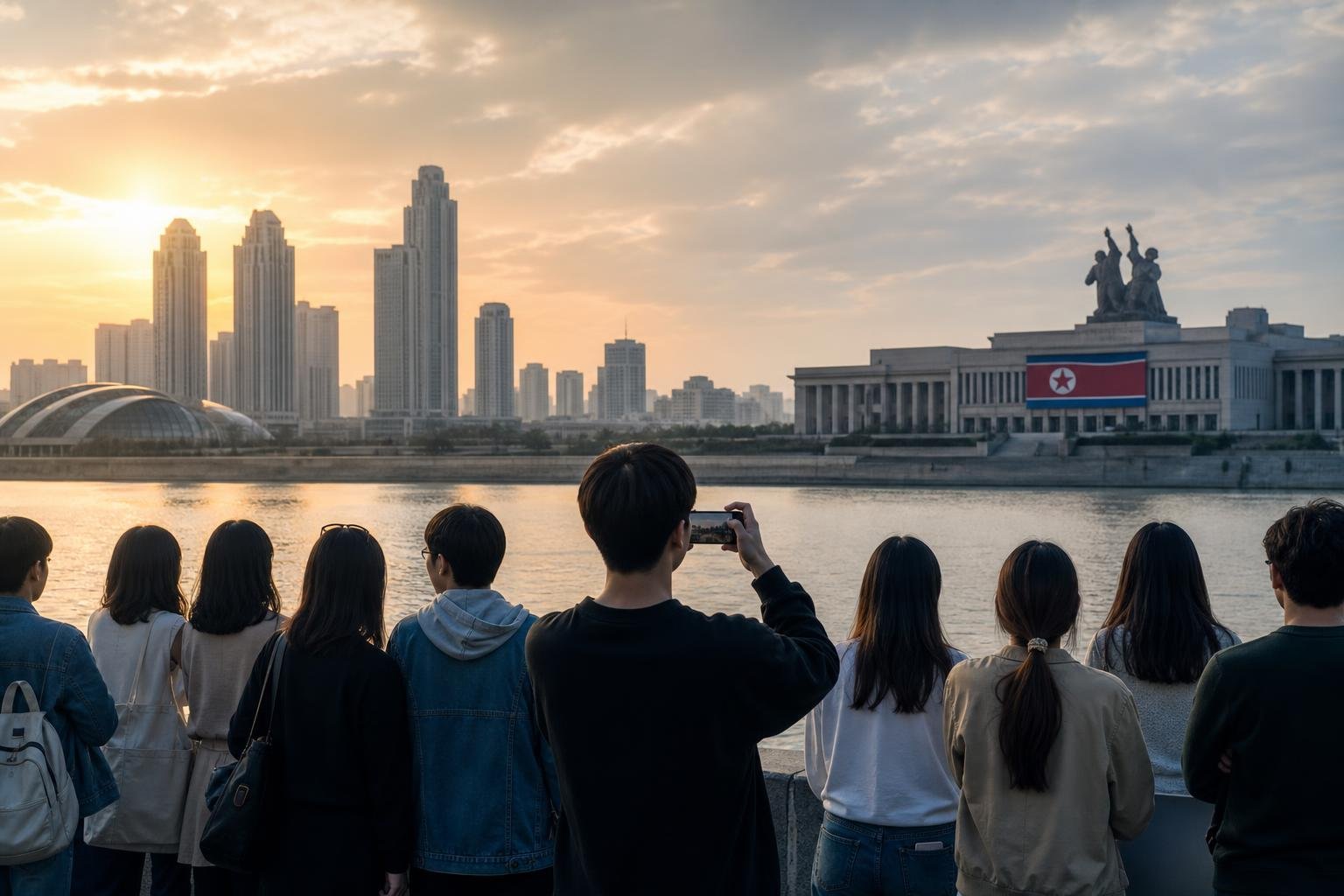
Most international narratives of K-pop influence depend on platform behavior: music-video views, hashtag communities, reaction clips, dance challenges, livestream comments and highly visible fan translation. Those practices make participation countable elsewhere. They are not an available yardstick for North Korean audiences. A lack of visible participation does not prove lack of interest, but it prevents outsiders from converting online visibility into an estimate of domestic cultural reach.
Translation also has a different role when circulation is private or fragmented. International fans often rely on subtitles, lyric translations, explanations of wordplay and rapid updates from official accounts. A person encountering a copied song or scene may receive none of that context. They might understand some Korean speech, infer meaning from images, rely on a friend’s explanation, or remember only a hook, style or emotional tone. That is a fundamentally different encounter from following a release cycle in real time.
Commercial influence is therefore the least defensible area for broad claims. There is no basis in the supplied material for linking North Korean exposure to official merchandise, ticketing, album sales or streaming revenue. The language of market penetration is misleading where normal consumer participation cannot be observed. The more defensible cultural question is not which act has “won” an audience, but how outside entertainment might circulate and be interpreted in circumstances that outsiders cannot measure cleanly.
What can be said without exaggeration
K-pop influence on North Koreans is best understood as a possibility within the broader, uneven circulation of South Korean culture, not as a documented national trend with a scoreboard. The available question invites genuine curiosity about music, media and social change. It also invites projection: outsiders can mistake global fame for local access, a vivid account for a representative one, or a compelling political narrative for a verified pattern.
A stronger public conversation would keep the categories separate. It would ask what material is being discussed, how it was encountered, when the encounter occurred, whose account is being cited and what the evidence can actually establish. It would preserve North Koreans’ individuality instead of casting them either as secret K-pop fans waiting to be liberated or as a sealed-off audience untouched by outside culture. Until directly relevant, independently checkable evidence is available, that precision is more informative than a dramatic claim of cultural conquest.
Sources and verification
- Best K-Pop Albums of 2026 So Far: 25 Staff Picks – Billboard / Established publication (Jul 20, 2026)
- The Best Moments From KCON LA 2026 – Billboard / Established publication (15 hours ago)
- Billboard's 21 Under 21: See Who Made the 2026 List – Billboard / Established publication (Aug 1, 2026)
- New Albums in 2026: Calendar of New Music Releases … – Billboard / Established publication (56 minutes ago)
- Fun fact: 2026 has been the biggest sales year in K-pop … – Facebook · Complex Music / Other search result
- "GREENGREEN" (Latest EP) has returned to the … – Instagram · kcdrama_news / Other search result
- Billboard 200 – Wikipedia / Other search result (2 days ago)
- [FULL] K-Culture Dive (2026-08-07) ▪ [K-Enter] STRAY KIDS … – Facebook · Arirang News / Other search result
Frequently Asked Questions
Can North Koreans listen to K-pop?
Some individual exposure to South Korean media is often discussed in accounts about private circulation, but public data cannot show how common K-pop listening is. There are no dependable streaming figures, sales records, concert data or representative surveys that identify a nationwide audience or particular artists.
Why are claims about specific K-pop groups in North Korea hard to confirm?
Global fame is not evidence of domestic reach in North Korea. A credible claim would need a traceable account naming the artist and work, a date and setting for the encounter, and preferably independent corroboration. International charts, social engagement and album sales cannot fill that gap.
Does exposure to South Korean entertainment change political views?
It may broaden some individuals' reference points about language, everyday life, fashion or consumer culture, but private exposure does not automatically produce political opposition. Accounts of changed taste, curiosity or comparison should not be converted into claims about a population-wide shift in political belief.