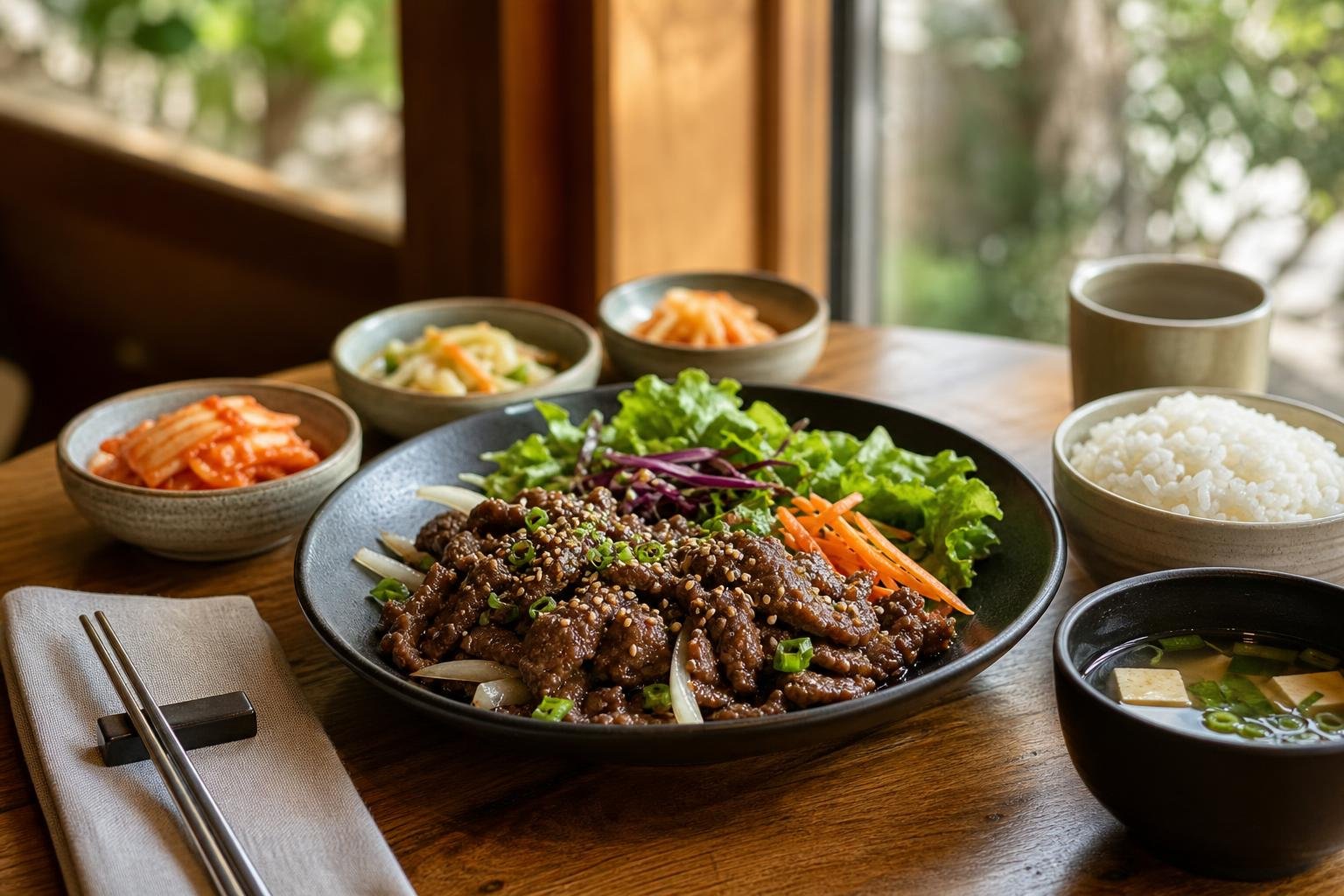
Header image: AI-generated editorial illustration; not a product photograph or documentary image.
When searching for bulgogi nearby, check the meat, serving style and what comes with the price. A sweet beef plate, spicy pork dish and tabletop BBQ order can all appear in the same results. Once you have found a local restaurant on a map or delivery app, use its current menu to work out which meal you will actually receive.
Read the dish name before the star rating
The Korea Tourism Organization describes beef bulgogi as thinly sliced marinated beef cooked with a sweet-savory seasoning. Its food directory also lists pork, chicken and duck variants. The word “bulgogi” alone is therefore not enough to identify every ingredient or cooking style.
| Menu wording | What it helps identify | Ask next |
|---|---|---|
| 소불고기 / beef bulgogi | Beef as the main meat | Is it served cooked? Does it include rice? |
| 돼지불고기 / pork bulgogi | Pork as the main meat | Is the marinade spicy or soy-based? |
| 고추장불고기 / gochujang bulgogi | A red chili-paste seasoning | Which meat is used, and can heat be adjusted? |
| Bulgogi bowl or 덮밥 | A rice-bowl format | Which vegetables, sauce and sides are included? |
| Tabletop BBQ bulgogi | A grilling or hot-plate service format | Who cooks, and is there a minimum order? |
A five-minute local search
- Search for “bulgogi” with your neighborhood or postcode.
- Open the restaurant’s own current menu where available.
- Check the address and branch: similarly named businesses may be unrelated.
- Compare a recent dated dish photo with the exact menu item, not the restaurant’s best-looking image.
- Confirm service hours, availability and any minimum order directly if they determine your visit.
Review platforms can reveal recurring questions about portion size, spice or service. They do not replace the restaurant’s current menu. An old review mentioning pork bulgogi cannot establish that today’s menu includes it, and a delivery-app photo may depict a different set from dine-in service.
Compare complete meals, not headline prices
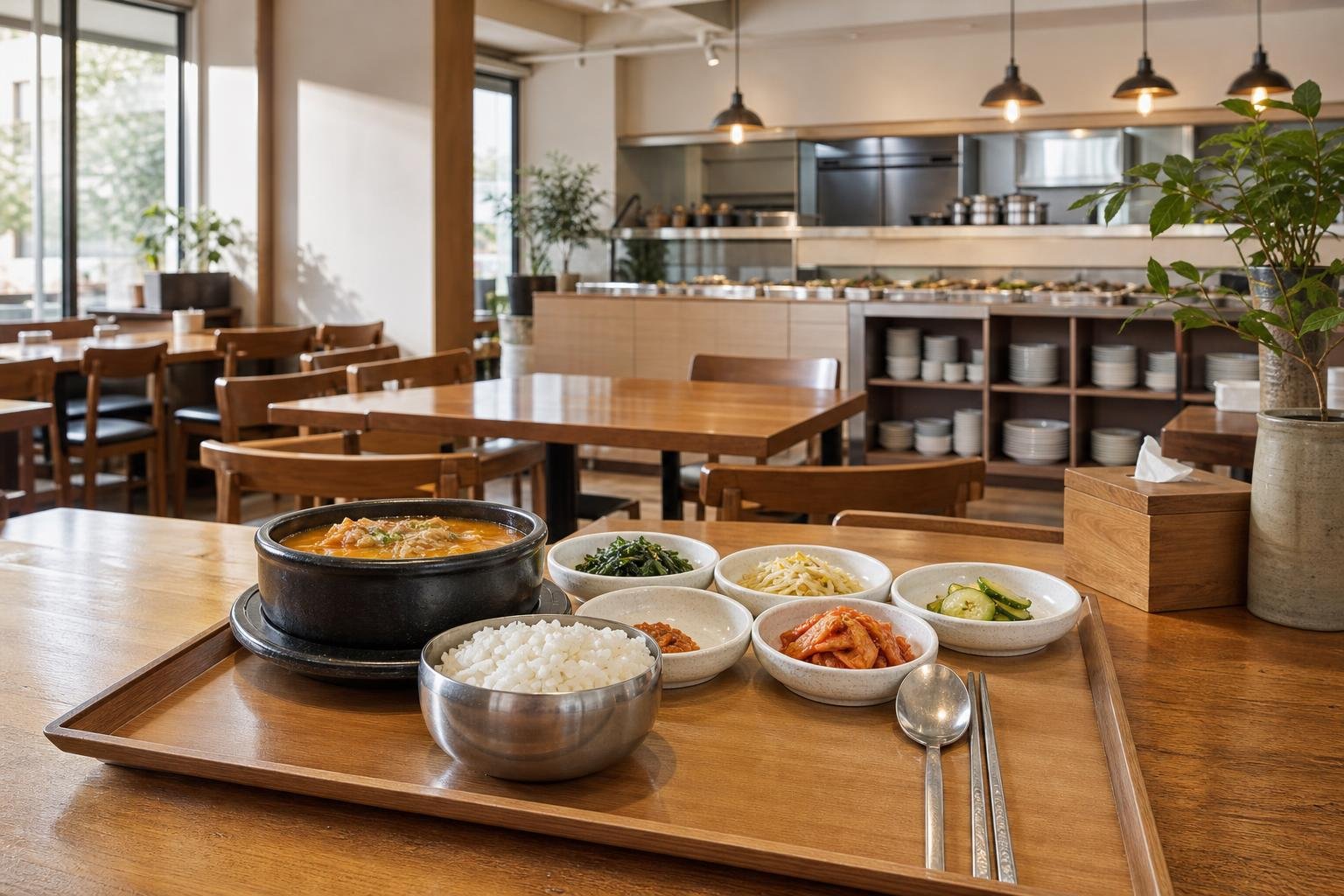
Write down meat portion or serving count, rice, soup, side dishes, extra sauces, delivery or service charges and whether the order is intended for sharing. Ask when the menu is unclear rather than estimating quantity from a photo.
Hypothetical comparison: a $15 plate with rice and sides can cost less overall than a $13 meat-only plate that requires $4 of additions. These are illustrative numbers, not local prices. Two diners should also check whether a BBQ listing is priced per serving, per person or per shared platter.
For takeout, ask whether sauce and wet side dishes can be packed separately. Think about the journey home, too: a sizzling plate in a photo will not arrive in quite the same condition after a long delivery.
Questions that prevent a disappointing order
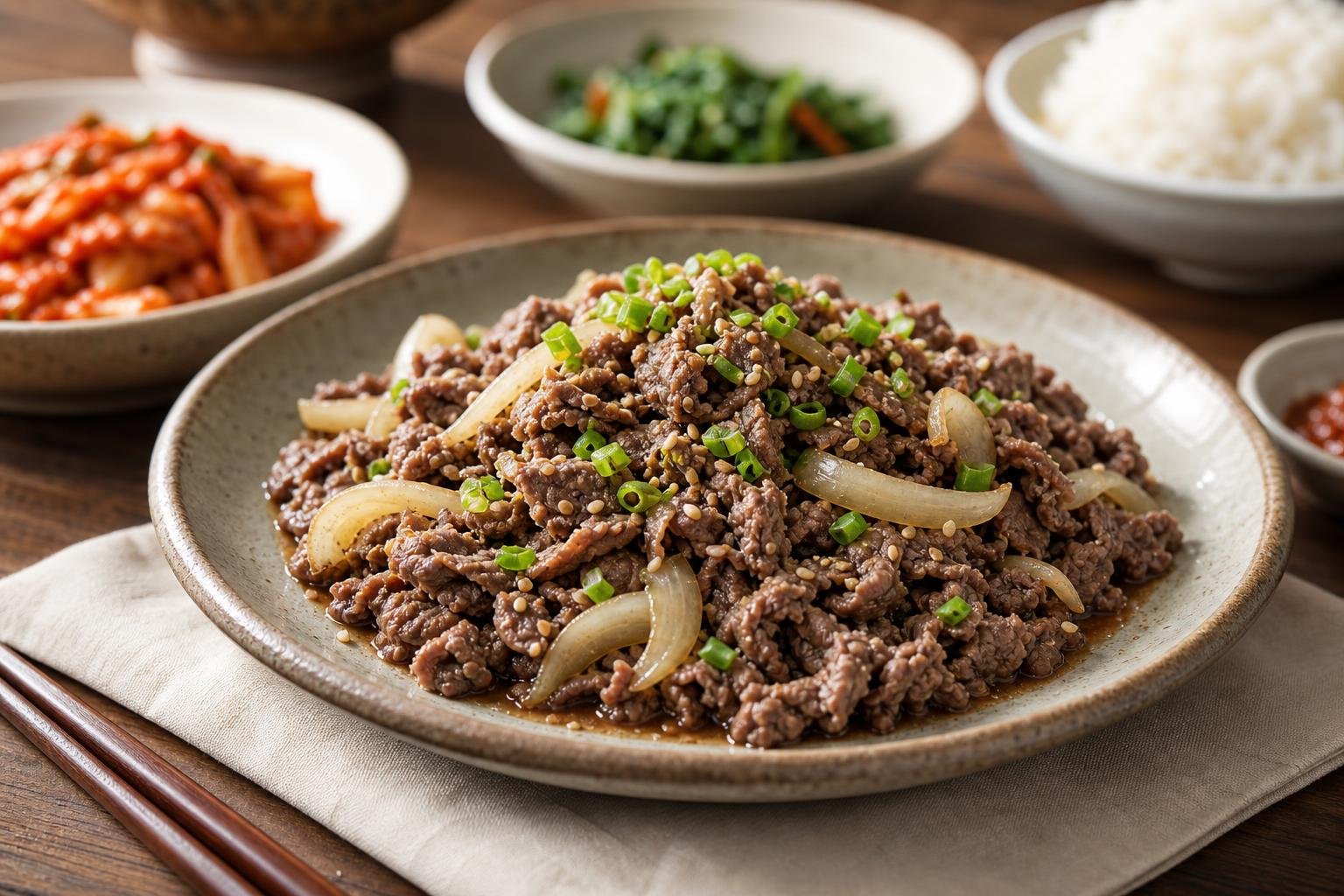
You can ask: “Is this beef or pork? Is it spicy? Is it already cooked? Does the price include rice and banchan? Is there a minimum order for one diner?” These questions identify the meal more clearly than asking whether it is “authentic.”
For dietary requirements, name the ingredient you need to avoid and ask about marinade, garnish, sauce and shared cooking surfaces. Sweet soy-style marinades may contain ingredients such as wheat, soy or sesame; recipes vary. Removing visible seeds cannot resolve a sauce ingredient or cross-contact concern. If staff cannot confirm an ingredient you must avoid, choose an option they can explain.
If you want to cook meat at the table, read the BBQ guide below. If you prefer a mixed rice bowl with vegetables, compare bibimbap instead of assuming it is the same dish as a bulgogi rice bowl.
Frequently asked questions
Is bulgogi always beef?
No. Beef is a familiar version, but pork and other meat variants exist. Read the exact menu name.
Is pork bulgogi always spicy?
Do not assume so. Ask whether the marinade is chili-based or soy-based and whether the kitchen can adjust it.
Does bulgogi always come with rice and sides?
It depends on the restaurant and the set you order. Check whether rice and banchan are included before comparing prices.
Sources and verification
- Korea Tourism Organization: Bulgogi — Official dish description.
- Korea Tourism Organization food directory — Related bulgogi variants; not a local restaurant ranking.