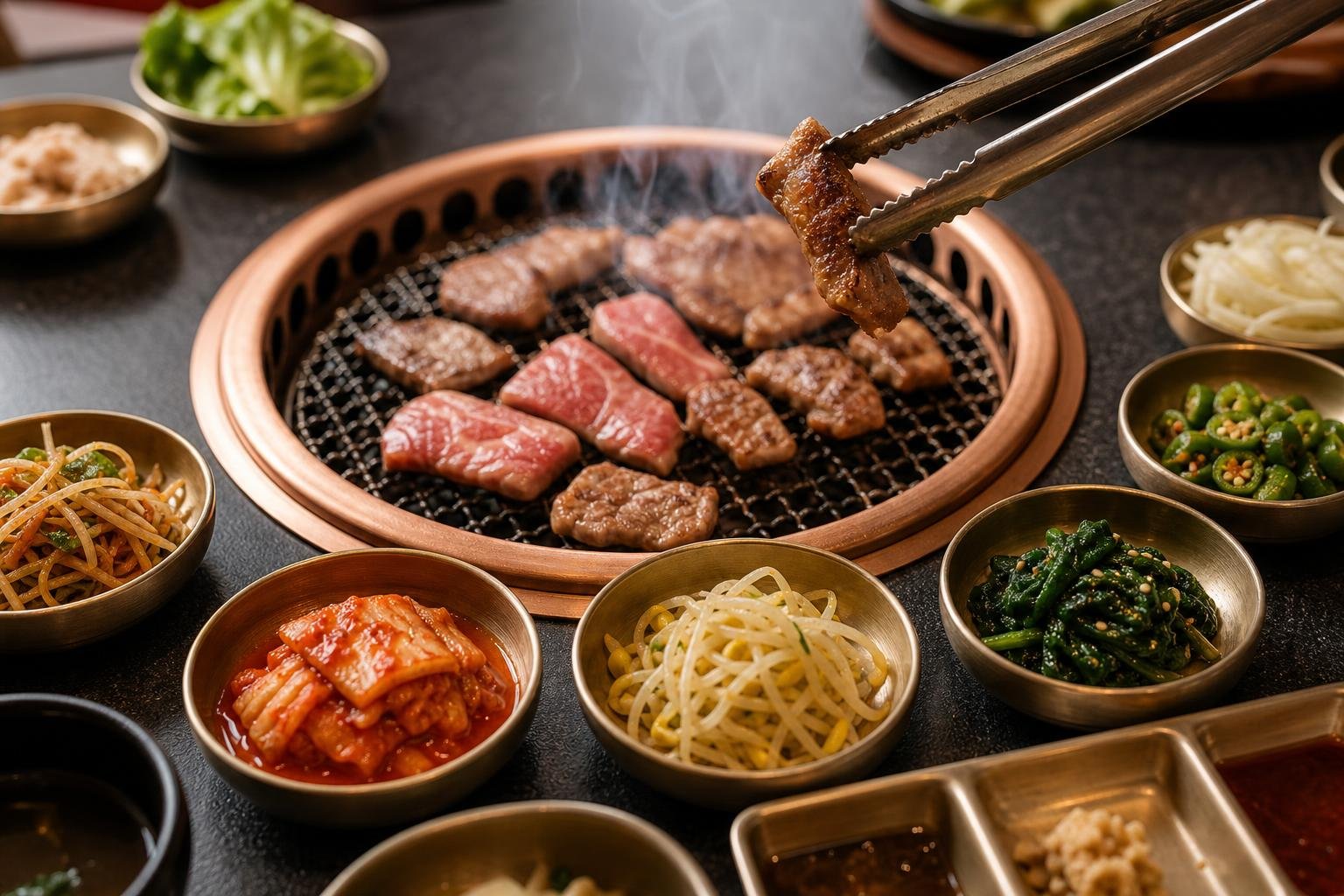
Header image: AI-generated editorial illustration; not a product photograph or documentary image.
Korean BBQ brings grilled meat, banchan, rice and sauces together in a shared meal. For a first order, choose a couple of meats and leave room to add more. Once the food arrives, cook manageable batches, try a small wrap and adjust the sides and sauces to your taste. Ask at the start whether the staff will handle the grill or whether your table will do the cooking.
Table of contents
This guide explains menu terms and first-visit decisions using Korea Tourism Organization food references and USDA food-safety guidance. It is not a restaurant ranking or an account of a personal restaurant visit. Check your chosen restaurant’s menu, minimum order, dietary procedures and cooking service before going.
How a Korean BBQ meal works at the table
Cook by a safe temperature, not color
USDA guidance calls for a food thermometer: whole beef and pork steaks, chops and roasts should reach at least 145°F/63°C and rest for three minutes; ground meat requires 160°F/71°C, and poultry 165°F/74°C. Thin slices can be difficult to measure, so ask staff to manage cooking when unsure. Keep utensils and plates used for raw meat away from ready-to-eat food.
The defining feature is the grill. Depending on the restaurant, it may be a gas grill set into the tabletop, a charcoal brazier, an electric plate, or a grill managed entirely by staff. That difference changes the experience. Charcoal can bring a more pronounced smokiness, while gas grills are common in busy rooms because their heat is easier to control. Some places cook every piece for you; others bring scissors and tongs and expect diners to manage the grill. Neither approach is more “authentic” on its own. It is a service choice, and asking when you are seated is entirely normal.
At a self-grilling table, one person should take responsibility for the raw-meat tongs. Those tongs should not touch cooked food, side dishes, or lettuce. If the restaurant provides a second pair, reserve it for cooked meat. Let the grill regain heat between batches rather than crowding it. Thin slices can cook rapidly and become tough if forgotten; thick cuts need turning, time, and sometimes a quick snip into bite-size pieces after they have seared.
Grilling is not meant to be a solitary performance. A good table is conversational and slightly collaborative: somebody watches the pork belly, somebody lays out lettuce leaves, somebody notices that the kimchi is nearly gone. Staff may change the grill plate or scrape away rendered fat. Accepting that help keeps the food tasting cleaner and reduces flare-ups. If smoke is bothering you, ask whether the table’s extraction system can be adjusted, or choose a restaurant known for staff-cooked service and stronger ventilation.
Do not wait until every item is cooked before eating. The usual pleasure comes from alternating temperatures and textures: a warm piece of grilled meat, a cool or crisp side dish, a sharp pickle, a mouthful of rice. Building a single enormous wrap can be fun, but it can also conceal the flavor of a carefully chosen cut. Begin with a small wrap or an unadorned piece dipped in sauce, then decide how much garlic, chili paste, rice, or fermented condiment you actually want.
What to order at Korean BBQ
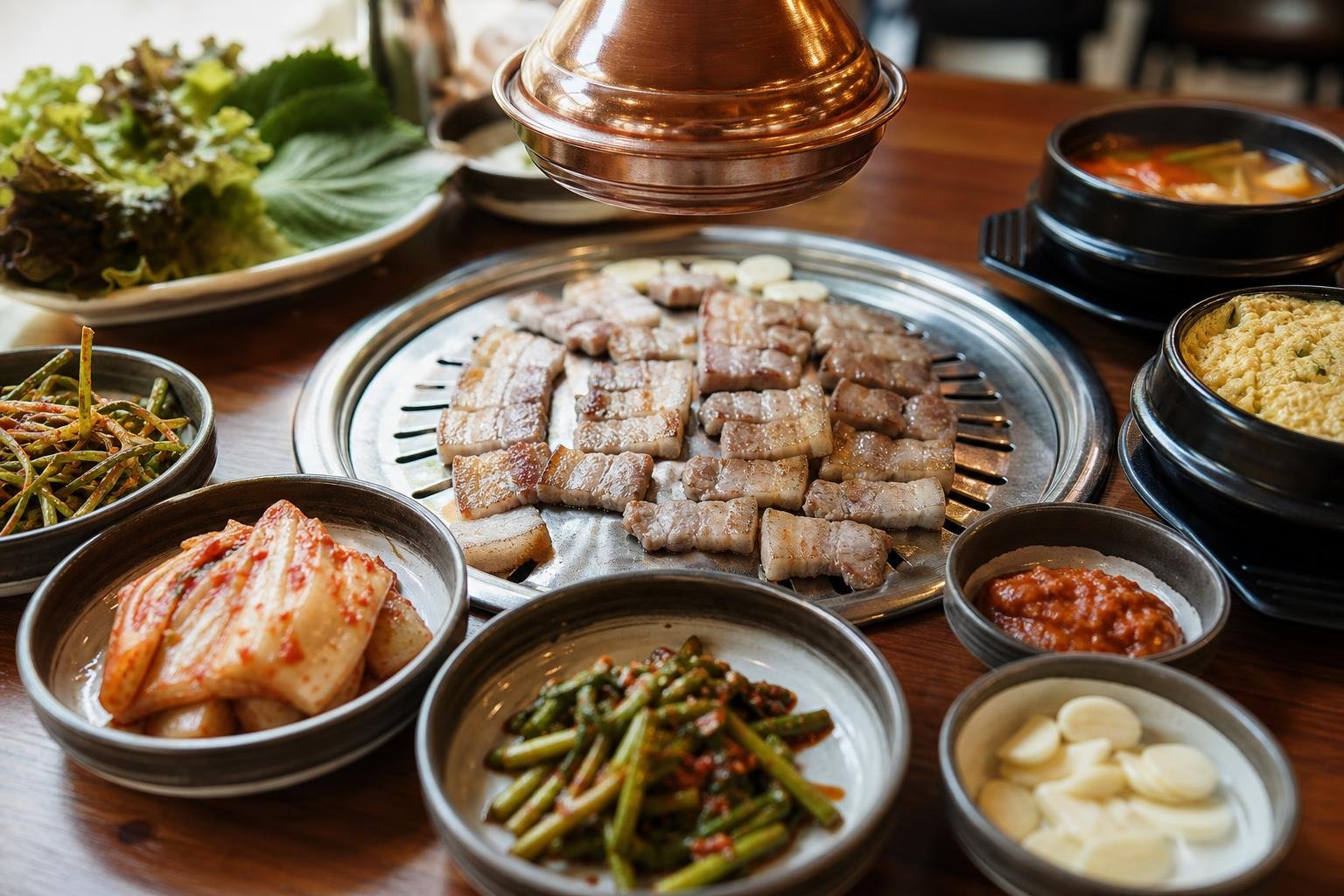
Menus often divide offerings by protein and by whether the meat is marinated. The most familiar starting points are beef and pork, but chicken, duck, seafood, intestines, and other cuts can appear depending on the restaurant’s specialty. Ordering the restaurant’s signature item plus one contrasting item usually gives a better first meal than treating the menu as a checklist.
Beef: brisket, short rib, and marinated cuts
Chadolbaegi is thinly sliced beef brisket. Its richness can pair with a light dipping sauce, sliced onion or a leaf wrap. Cook in small batches and ask staff for help with thin pieces. A change in color or a browned surface does not establish a safe internal temperature.
Galbi, sometimes written kalbi, generally refers to short rib. It may arrive as a bone-in cut, as boneless slices, or as a marinated preparation. The marinade commonly gives it a sweeter, savory profile, so it can caramelize quickly. Watch for darkening at the edges rather than assuming more char is always better. A restaurant may use the English term “LA galbi” for thin-cut flanken-style ribs, a format recognizable by cross-cut bone pieces.
Bulgogi is commonly thinly sliced, marinated beef, though the word is broader than one fixed recipe or cut. At some restaurants it is grilled; at others it is cooked on a pan with onions and sauce. It is tender, accessible, and often appealing to diners who prefer a less aggressively smoky introduction. It is also a reminder that not everything grouped under Korean barbecue produces the same tabletop-grill experience.
Pork: the grill’s crowd-pleasing center
Samgyeopsal, pork belly, is one of the most recognizable orders. It often comes in thick, unmarinated strips that are cut with kitchen scissors as they cook. The fat is part of the point: it crisps at the edge, seasons the grill, and pairs well with pungent accompaniments. It can also generate smoke and splatter, so avoid overloading the plate and do not lean across the grill in loose sleeves.
Moksal is pork neck or collar, generally a meatier and less fatty alternative. It is a strong companion order to pork belly because the two cuts offer a useful contrast. Marinated pork may be listed as yangnyeom, meaning seasoned or marinated. Such dishes can be delicious but deserve more attention on the grill because sugary marinades catch quickly.
A sensible first order is one fatty cut and one leaner or marinated cut, then a vegetable, noodle, soup, or rice dish to turn the grill into a complete meal. Large groups should order in stages. It is easier to add another plate than to confront a grill full of cooling, overcooked meat while the table is already full.
Banchan, sauces, and the art of the wrap
Banchan are side dishes served for sharing. Their number, ingredients, and refill policy differ from restaurant to restaurant. You may see napa-cabbage kimchi, radish kimchi, bean sprouts, seasoned spinach, potato salad, fish cake, pickled vegetables, or small portions of braised dishes. They are not merely decoration. Their acidity, sweetness, chili heat, and crunch prevent grilled meat from becoming monotonous.
Kimchi is a broad category of fermented and seasoned vegetables, not one uniform product. Some preparations are deeply sour and spicy; others are fresher, softer, or milder. If a restaurant permits it, kimchi can be placed at the edge of the grill to warm and lightly caramelize. Ask first, especially where staff control the cooking surface. The same courtesy applies to garlic, mushrooms, onions, and cheese: some tables are designed for them, while others reserve the grill for meat.
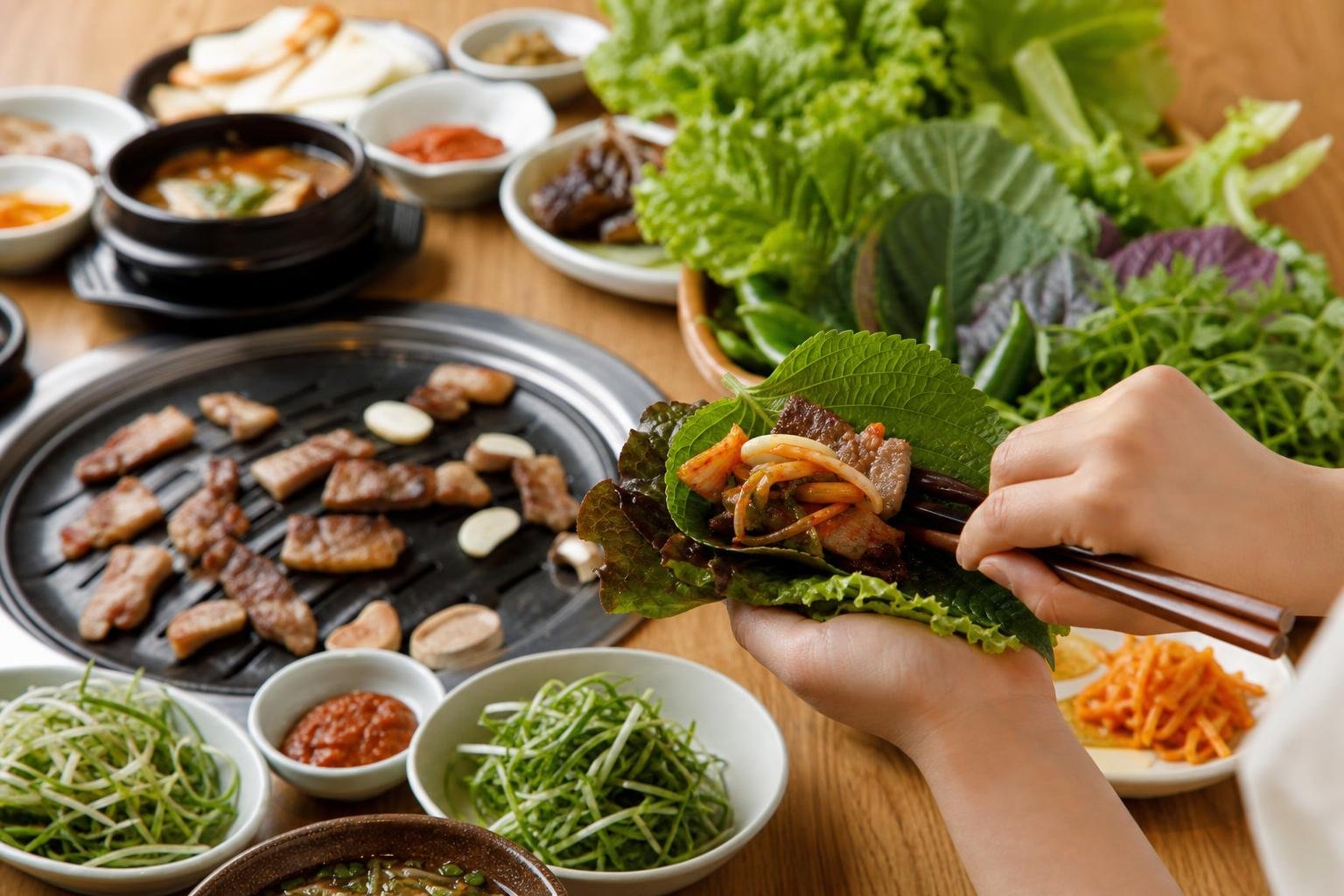
The lettuce or perilla leaf wrap is called ssam. Start with one leaf, add a piece of meat, then use a restrained amount of rice, garlic, kimchi, or sauce. Fold it into a manageable parcel. A wrap should be easy to eat in one bite, not a construction project. Perilla, if offered, has an aromatic herbal flavor that is quite different from lettuce; trying one of each is a simple way to learn what you prefer.
Two condiments can look interchangeable but serve different roles. Ssamjang is a thick savory paste often used in wraps. Sesame oil with salt and pepper may be offered as a dip; other tables provide soy-based onion dressing or chili sauce. For taste alone, start with a little. If an ingredient presents an allergy or dietary concern, confirm the sauce’s ingredients and handling before tasting it.
Ordering beyond the grill
A tabletop meal benefits from at least one non-grilled dish. Steamed rice grounds salty and spicy flavors. Doenjang-jjigae, a soybean-paste stew, and kimchi-jjigae, a kimchi stew, are often ordered to share, though recipes and heat levels vary. Cold noodles can refresh the palate after rich meat; they may arrive in a chilled broth or with a spicier mixed sauce. Ask your server how the dish is intended to be shared if portion size is unclear.
Drinks are optional, not an obligation. Water, tea, soft drinks, beer, rice wine, and soju may be available depending on the venue and local licensing rules. The most useful choice is the one that lets everyone enjoy the food safely. If alcohol is part of the table, confirm local legal-age rules and do not let the social ritual of pouring for others override anyone’s preference to decline.
Restaurants may sell an all-you-can-eat option, set menus, or individual plates. These formats ask for different decisions. An all-you-can-eat policy can look economical, but check time limits, remaining-food charges, minimum party rules, and whether premium cuts are excluded. A set menu lowers the pressure of choosing and may be best for a first visit. A la carte ordering gives greater control over quantity, cut, and budget, particularly for two diners or for a table with mixed dietary needs.
Questions to ask before you sit down
Dietary planning requires precision because a grill is a shared surface and Korean sauces can contain ingredients not obvious from the English menu. Vegetarians and vegans should ask not only about meat-free dishes but also about broths, fish-based seasonings, egg, and cross-contact on the grill. Diners avoiding pork, beef, alcohol, gluten, shellfish, or particular allergens should ask what is in marinades and side dishes, whether separate utensils are available, and whether staff can accommodate the request in practice.
Halal diners should not infer certification from the presence of chicken or seafood. Ask directly about certification, sourcing, marinades, alcohol-based ingredients, and contact with pork or non-halal meat. The answer may be no, and that is better established before ordering. For any severe allergy, contact the restaurant ahead of time in the local language where possible, and treat a vague assurance as a reason to choose a place with a clear documented procedure.
Reservations matter at popular dinner hours, especially for groups. Ask about time limits, minimum orders, ventilation, accessibility, and the type of grill. Clothing is practical rather than ceremonial: choose layers that can be washed and avoid wearing a prized coat if smoke is likely. Tying back long hair and keeping sleeves clear of a hot tabletop are basic safety measures, not breaches of etiquette.
Eating with confidence, not performance anxiety
Korean BBQ does not demand a perfect sequence of orders or a learned set of gestures. Restaurants differ by region, ownership, price point, customer base, and the cuts they specialize in. What matters is paying attention to the food, sharing space at a hot grill, and communicating clearly with the people serving and eating with you. Ask how the house recommends a signature cut. Request another banchan dish if refills are offered. Say when you are full before a companion orders more.
Pay attention to the details that make this particular meal work: the cut you chose, whether it is marinated, who is managing the grill and which sides you enjoy with it. Remembering those choices gives you a useful starting point for your next order.
Sources and verification
- Korea Tourism Organization: Korean Food Story — Official Korean-food context.
- Korea Tourism Organization: Bulgogi — Dish description and marinated-beef context.
- USDA: Safe Minimum Internal Temperature Chart — Temperature and rest guidance.
- USDA: Grilling Food Safely — Thermometer use and safe handling.
Frequently Asked Questions
What should a first-time diner order at Korean BBQ?
Start with one signature meat, then add a contrasting cut such as a richer pork option and a leaner beef or marinated item. Include rice, a stew, or noodles if available. Order in rounds rather than filling the table immediately, since grilling speed and appetite vary.
Do diners cook the meat themselves?
It depends on the restaurant. Some provide tongs and scissors for guests, while others have staff cook, cut, and serve the meat. Ask when you are seated. Keep raw-meat utensils separate from cooked food, and request help if you are uncertain about a thick cut.
Are there good options for vegetarians or people with allergies?
Possibly, but confirm carefully before ordering. Vegetable dishes, rice, noodles, and stews may contain meat broth, fish-based seasonings, egg, or allergens. Shared grill surfaces also create cross-contact concerns. For a severe allergy or halal requirement, contact the restaurant in advance and ask about specific ingredients and procedures.
Explore more K-culture stories
Related reading