Korean Drinking Culture: A Cultural Guide for Newcomers and Travelers

Korean drinking culture editorial guide

Korean drinking culture is best understood not as a national instruction to drink heavily, but as a set of social situations in which alcohol can carry meanings beyond the drink itself: hospitality, relaxation after work, marking a milestone, or extending a meal. Those meanings vary sharply by age, workplace, friend group, location, income and personal preference. A visitor who treats every lively table, late-night bar street or dramatic online clip as proof of one fixed Korean behavior will miss that variation.

Korean drinking culture editorial guide
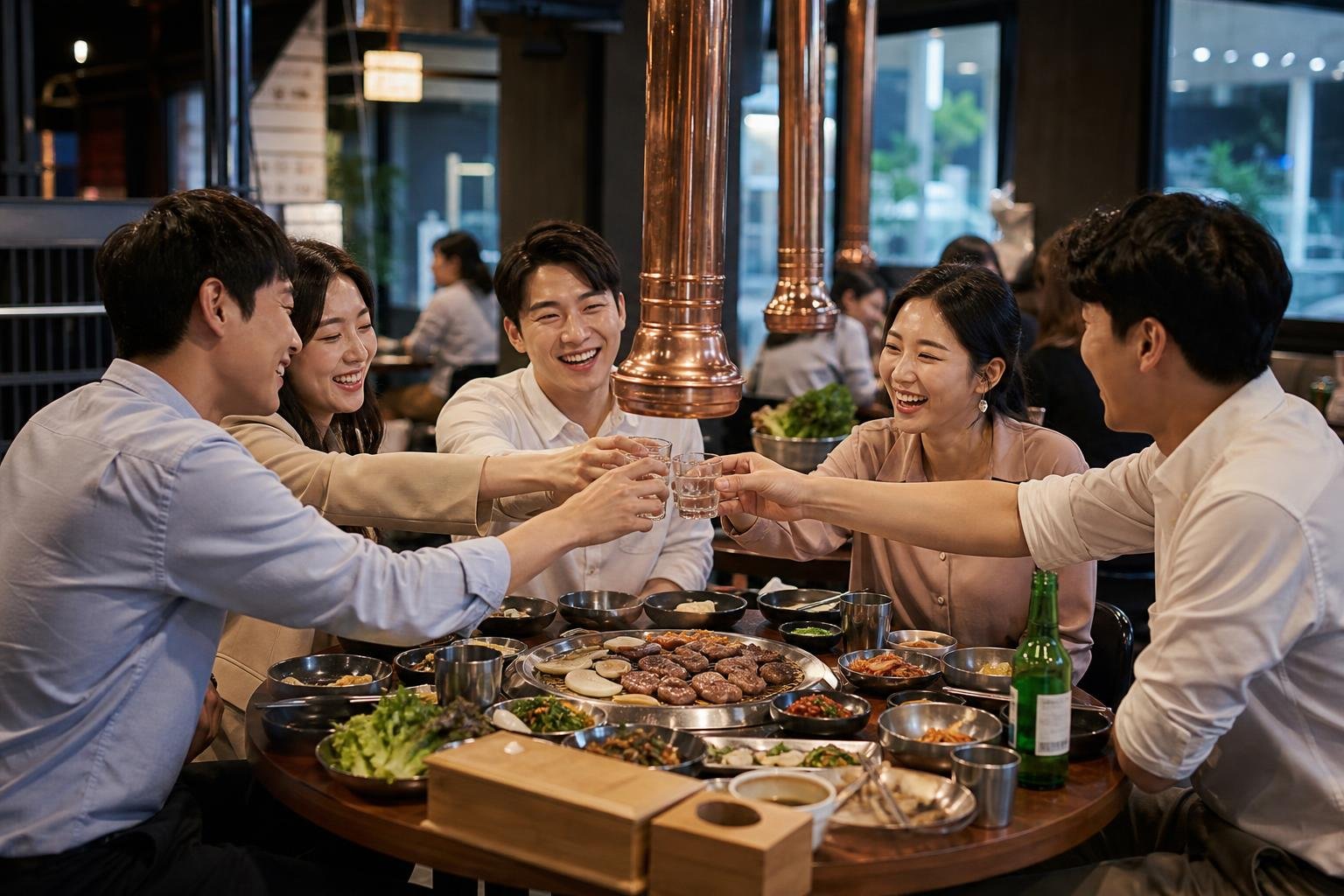
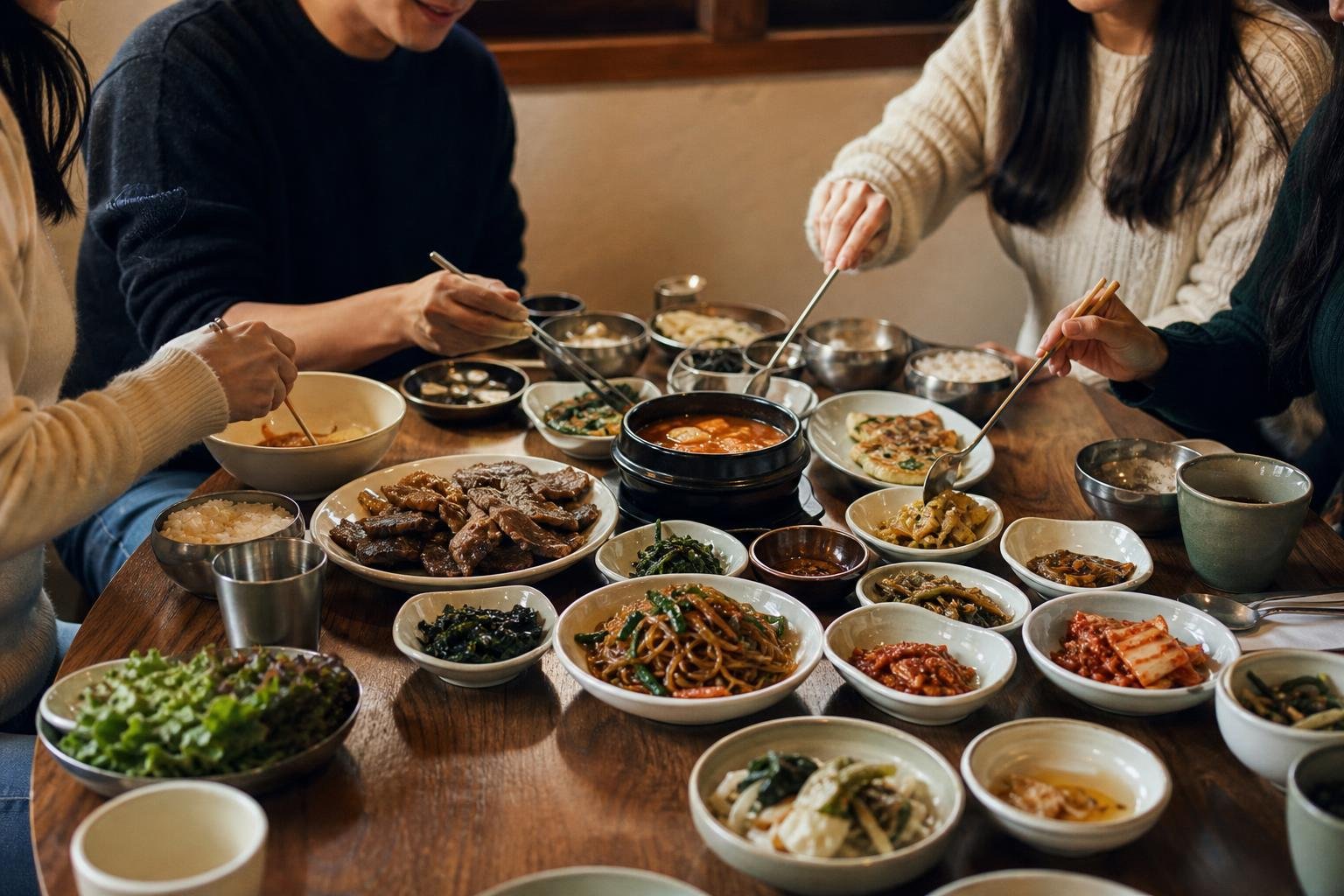
Original editorial illustration for Korean restaurant group dinner shared dishes editorial photo

That distinction matters because social media rewards the most startling version of an experience. Two Instagram search results supplied for this article, one from yunji.kr and another from pau.liline, are indexed with the same emphatic line: “the Korean drinking culture is actually insane.” It is an effective hook. It is not, by itself, a reliable measurement of what Koreans do, what visitors will encounter, or what anyone is obliged to accept.

The useful question is therefore not, “Is Korea’s drinking culture insane?” It is: what is happening in this particular gathering, and how can I participate on my own terms? That approach leaves room for traditions, for changing attitudes, and for a simple fact often obscured by viral storytelling: declining alcohol is a valid personal choice.

Why Korean drinking culture looks so dramatic online

A short video can communicate a clear contrast in seconds: a packed table, several bottles, a ritualized pour, a round of shots, people moving to a second venue after dinner. The visual grammar is easy to understand even without Korean. Captions then do much of the interpretive work. A phrase such as “actually insane” converts an encounter into a cultural verdict, inviting viewers to react with surprise, admiration or concern.

The two Instagram results are useful as evidence of that framing, but their limits should be kept precise. Neither indexed result supplies a posting date, a location, the speaker’s background, a full account of the gathering, or verified information about how widely the reel travelled. The matching snippet may indicate a repeated script, duplicated wording or shared audio; search results alone cannot establish which account posted an idea first, or whether either clip began a broader trend. No credible origin story, scale of participation or newly emerging national practice can be confirmed from the supplied material.

That is not a minor technicality. A familiar custom can be filmed as a revelation when it reaches an international audience, especially when the audience has learned about Korea through dramas, food videos and nightlife clips. The international version often compresses a long evening into a spectacle of shots. It may leave out the meal, the talk, the different comfort levels around the table, the person drinking soda, and the next-day consequences. Translation intensifies the compression: Korean terms may be rendered simply as “drinking culture,” even though their social meanings are more specific.

Platform behavior also favors the exceptional. A creator is more likely to post a memorable work dinner or an unusually energetic night with friends than an ordinary meal where someone has one beer, has none, or goes home early. Viewers should read a reel as one person’s edited encounter unless the creator provides enough context to make a broader claim.

Start with the occasion, not the stereotype

Original editorial illustration for South Korea office team dinner restaurant licensed photo

In Korean, sul means alcohol, while suljari commonly refers to a drinking occasion or gathering. The latter idea is often more revealing than the bottle on the table. The gathering may be a dinner among university friends, a family celebration, a reunion, a date, a client-facing meal or an after-work event. The same person may behave very differently across those settings.

One term newcomers often hear is hoesik, usually used for a company group meal or after-work gathering. It has become a cultural shorthand abroad for workplace pressure, but that shorthand can erase the central question: who has invited whom, and what does attendance mean in that organization? In one office, a team dinner may be an occasional meal where people make brief appearances. In another, seniority may make the invitation feel more difficult to refuse. Neither experience should be inflated into a universal rule about all Korean employers.

Friends may also speak of ilcha and icha, literally a first and second round. The first stop can center on dinner; a later stop might be a pub, bar, karaoke room or another restaurant. The vocabulary describes the sequence, not a requirement to stay until the end. A gracious departure after the meal, or after one round, can be more realistic and more respectful than agreeing to a night you do not want.

Food matters here. Alcohol is frequently consumed with dishes known as anju, food ordered to accompany drinks. That is one reason a table can look abundant in videos: the social occasion may be structured around shared plates as much as alcohol. Reducing the scene to shots alone loses the dining element and can make viewers assume that alcohol is the sole purpose of everyone present.

Etiquette is a language of respect, not a contract

Many travelers encounter advice about pouring and receiving drinks with two hands, particularly when interacting with someone older or more senior. They may also see people turn their head slightly away while drinking in front of an elder. These gestures are commonly associated with respect and hierarchy. They are useful to recognize, but they should not be treated as a pass-fail etiquette exam or as proof that every table follows the same protocol.

Context changes the weight of a gesture. A formal meal with relatives, a first encounter with a senior colleague and a casual evening among close friends do not carry the same expectations. Younger people may be more relaxed about ritual; established friends may have their own routines; international guests are generally not expected to perform an unfamiliar custom perfectly. Paying attention, following the host’s lead when comfortable, and asking a quiet question are better strategies than performing a memorized set of rules.

It also helps to separate offering from obligation. A host who refills a glass may be expressing warmth. A colleague who says “one more” may be joking, encouraging, or genuinely pressing. The words can sound similar from the outside, but consent is the decisive difference. Cultural literacy should never be used to explain away pressure, mock someone for setting a limit, or make alcohol seem compulsory.

If you choose to drink, pace yourself and keep track of what is in your glass. If you do not, a brief, calm response is usually clearer than an elaborate apology. Useful phrases include “Sul-eun an masyeoyo” (“I do not drink alcohol”) and “Oneureun an masilgeyo” (“I will not drink today”). A person may prefer not to drink for health, faith, medication, recovery, training, work the next morning or no stated reason at all. None requires a defense.

Ways to stay part of the gathering without drinking

  • Accept the meal, tea, soft drink or nonalcoholic option if you want to join the social part of the occasion.
  • State your boundary early and simply, especially if you know a refill or a toast may come up later.
  • Offer a nonalcoholic toast, or raise your glass of water or soda when the group toasts, if that feels comfortable.
  • Plan a departure time before a work dinner or a multi-stop night, then leave politely rather than negotiating after you are tired.
  • Thank the host for the invitation without thanking anyone for alcohol you did not want. Appreciation and consent are separate things.

These are not tricks for “beating” a culture. They are ordinary social tools. A respectful gathering makes space for the person who joins fully in conversation while drinking something else.

What visitors may see on the table

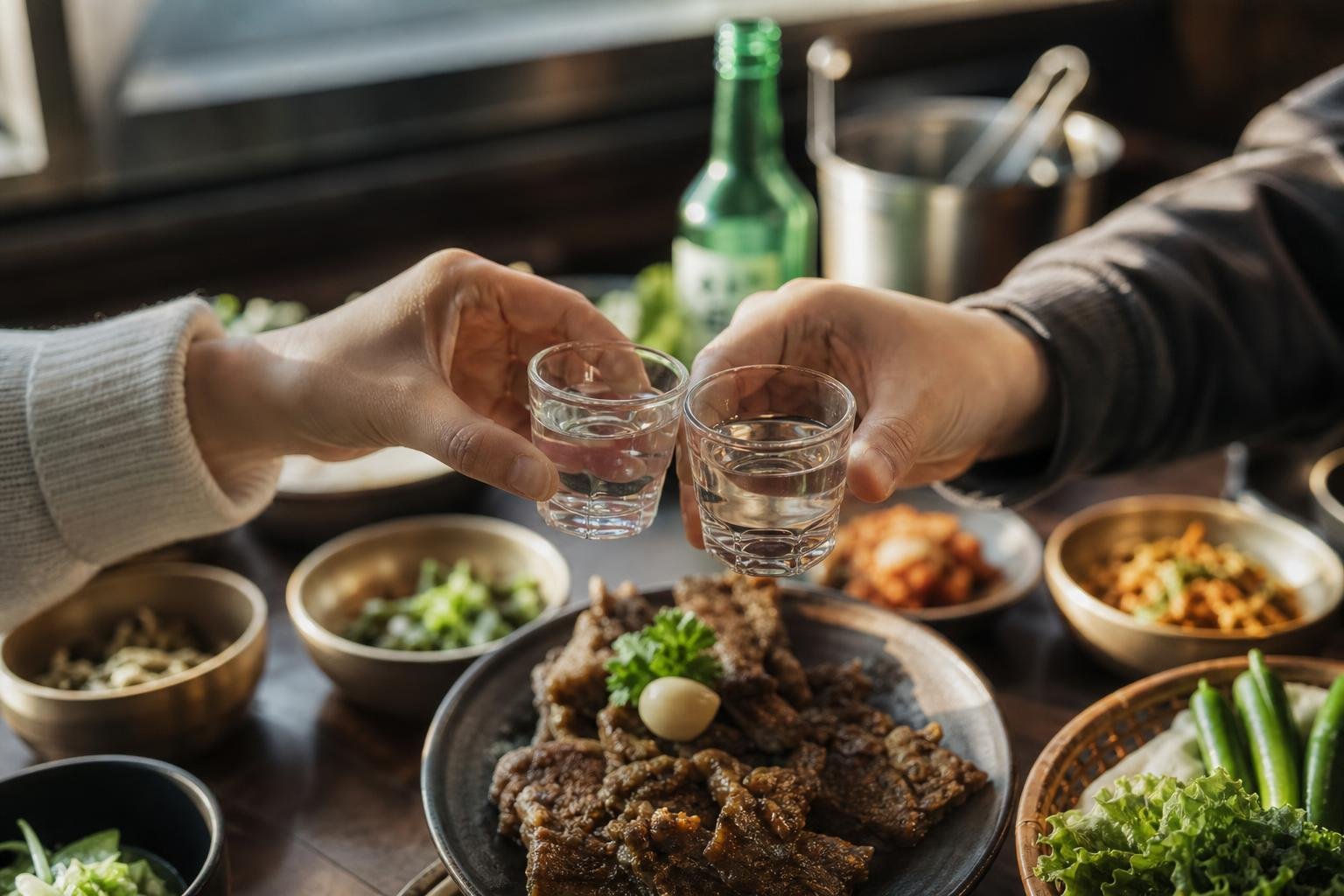
Soju is likely to be the drink international viewers associate most quickly with Korea, often served from a small green bottle into small glasses. Beer is another familiar part of casual meals and nights out. Some groups mix soju and beer; others order wine, highballs, makgeolli or no alcohol at all. It is better to recognize soju as a prominent symbol than to assume it appears at every social occasion.

A toast may be called geonbae, a word commonly used in a celebratory drinking moment. In a viral edit, a toast can be made to look like a command to empty a glass. At an actual table, its significance can range from a formal acknowledgment to a lighthearted group cue. Watch what others do, but retain the right to sip, use a nonalcoholic drink, or decline.

Newcomers can also misread familiarity as unlimited intimacy. Shared food, several bottles and loud conversation may create a rapid feeling of closeness, particularly late in the evening. That does not erase professional boundaries, personal boundaries or the need to get home safely. A warm group dynamic is not an instruction to reveal more than you wish or to continue after your comfort has ended.

Workplace stories need especially careful translation

Original editorial illustration for Korean soju glasses restaurant table editorial photo

Workplace drinking is where international discussions most often become categorical. Older narratives about office hierarchy, after-hours loyalty and forced participation remain influential because they are vivid and because some people have had difficult experiences. Yet “Korean workplace culture” is too broad to predict the conduct of a particular company, department or manager.

Ask practical questions rather than relying on a reel: Is the event framed as a meal or a drinking night? Is it during work hours or afterward? Are junior staff able to leave? Do people order nonalcoholic drinks? Is attendance clearly voluntary? The answers reveal more about the environment than a national label does. A traveler, student or new hire can ask a trusted colleague how the team usually handles these occasions; the question is not rude, and it gives a person room to make an informed choice.

For employers and hosts, the standard should be straightforward: hospitality does not require alcohol, and inclusion should not depend on staying late or drinking at someone else’s pace. The commercial side of nightlife can make high-consumption scenes highly visible, but the supplied social-media material does not document a campaign, a brand partnership or a product-led trend behind the reels. It would be inaccurate to assign commercial motives to them without more evidence.

How to watch and share these videos responsibly

The excitement around Korean culture online can encourage a particular kind of participation: viewers repeat a catchphrase, tag friends, plan a Seoul night out, or imitate a toast without knowing what setting they are recreating. The responsible version of participation begins with a few checks. Who is speaking? Is the clip describing one night, an institution, a generation or an entire country? Is the caption translating a specific Korean practice, or replacing it with a more dramatic English label? What is outside the frame?

Be cautious with recycled clips and detached captions. The supplied Instagram results show identical indexed language across two different reels, but not enough information to establish their relationship. Reposting a clip with a stronger caption can make an old anecdote appear current or make a private experience appear typical. Before sharing, preserve the original account context where possible and avoid presenting an influencer’s reaction as social research.

There is no reason to predict that the phrase will have lasting trend power. Dramatic descriptions of drinking travel easily because they are legible across languages, but they do not create a stable category of Korean life. The more durable takeaway is less sensational: group drinking occasions can be socially meaningful, traditions around age and respect can still be visible, and participation is not the same as compliance.

Approach the table with curiosity, not a dare. Learn a few words, accept the food if you want it, notice the occasion, and be direct about your limits. That is a more accurate response to the online fascination than either romanticizing alcohol or treating every Korean social event as a test of endurance.

Sources and verification

Frequently Asked Questions

Is drinking mandatory at Korean social or work events?

No. An invitation can carry social importance, especially in a workplace or seniority-based setting, but it does not remove personal choice. Attendance, a toast and alcohol consumption are separate decisions. A short, polite refusal and a nonalcoholic drink can allow someone to remain part of the occasion.

Why do online videos describe Korean drinking culture as extreme?

Short-form video favors visually striking nights, concise captions and strong reactions. The supplied Instagram results use the same dramatic wording, but do not provide enough context to show how typical the scenes are, who participated, or whether the clips represent a new, widespread practice.

What should a visitor say if they do not want alcohol?

Keep it brief and calm. "Sul-eun an masyeoyo" means "I do not drink alcohol," while "Oneureun an masilgeyo" means "I will not drink today." You can still join the meal, raise a nonalcoholic drink for a toast, and leave politely when you are ready.