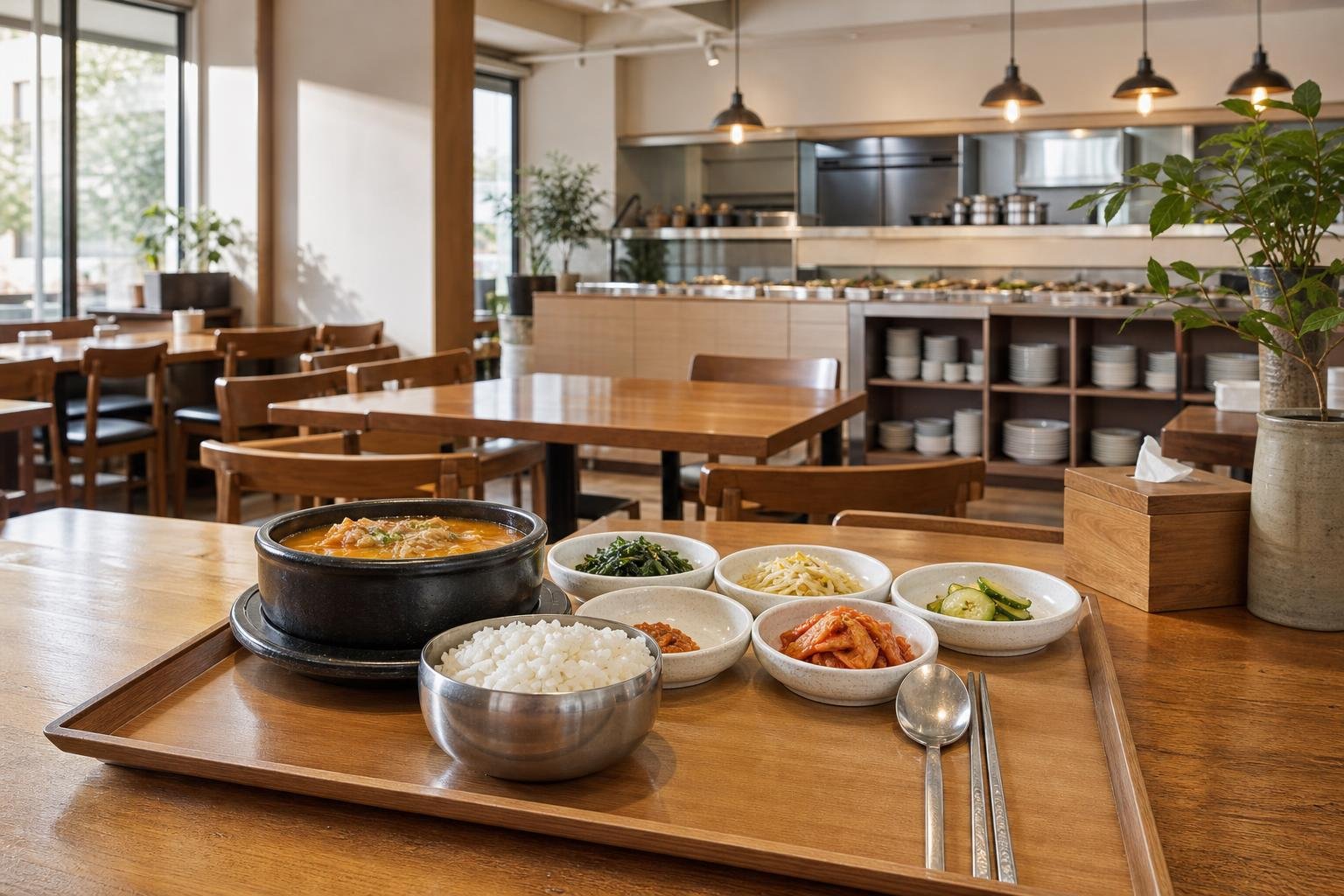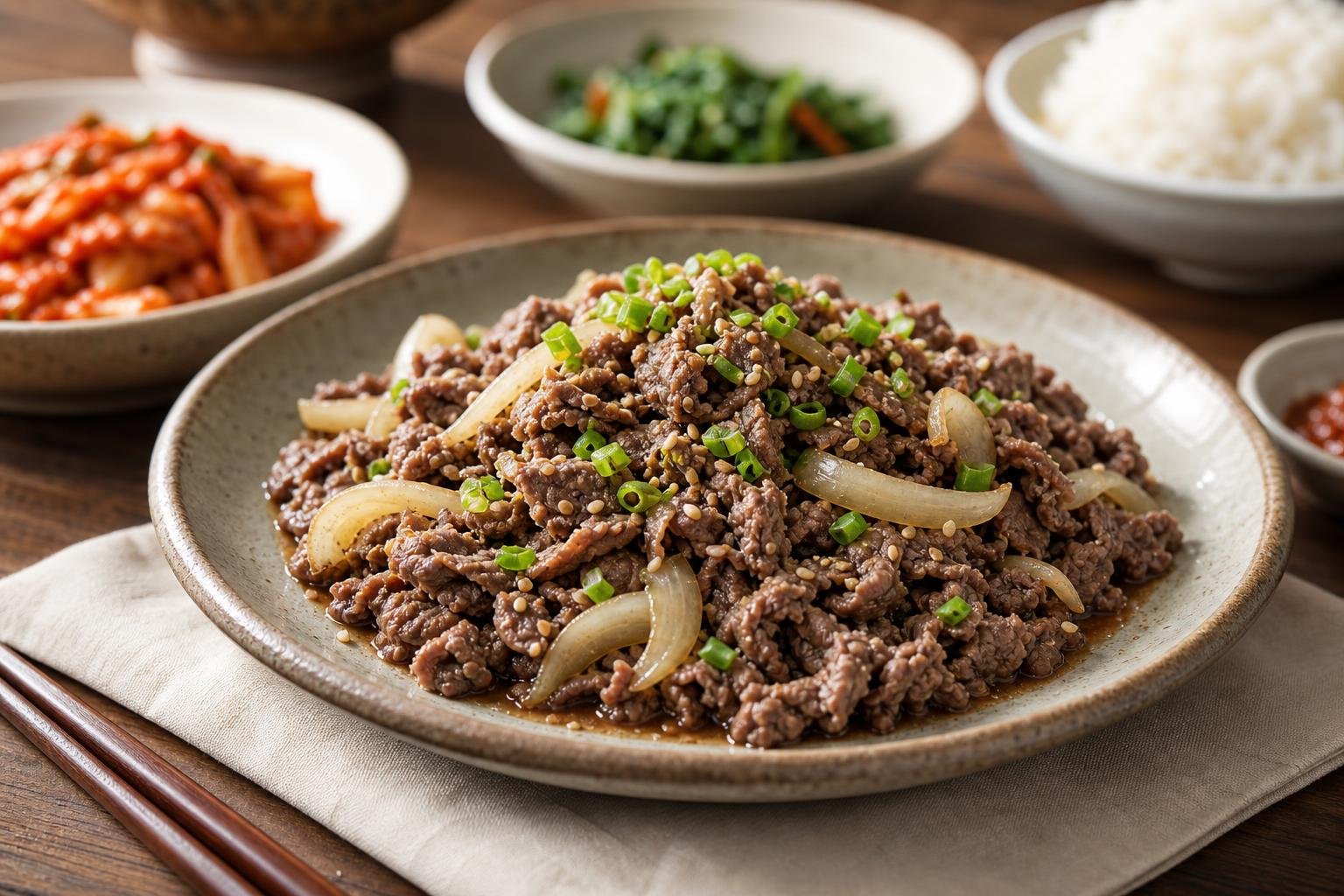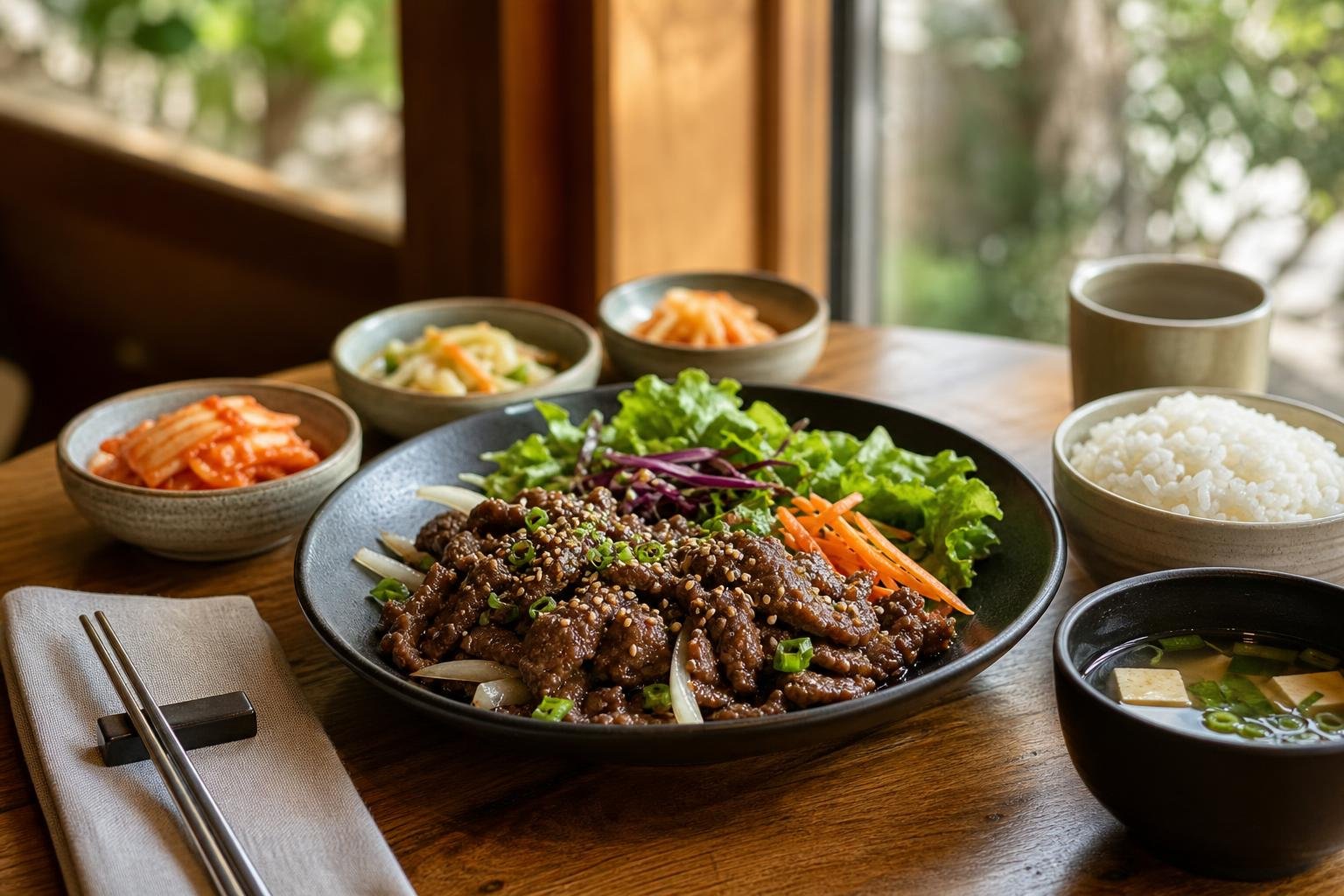
A local Yelp listing offers one useful model for how to approach a Korean bulgogi near me search: look for the dish by name, then read the setting around it. Yelp’s entry for Ajumma Kimbob Deli in Carrollton describes the venue as a cafeteria with “authentic, basic, and homestyle meals,” while its listing snippet specifically calls out pork bulgogi, a large portion, and flavor. That combination tells a diner more than a generic “Korean restaurant” label would: the meal may be aimed at a casual, substantial, everyday lunch or dinner rather than a cook-at-the-table occasion.
Table of contents

That is the useful way to treat this kind of search. “Near me” needs your location, your preferred dining format, and a quick check that the restaurant is still offering the item you want. A listing can point you toward a promising stop; it should not be the last check before you leave home.
Korean Bulgogi Near Me Is a Menu Search First
The phrase Korean bulgogi near me has high local intent. It asks two questions at once: where can I get this dish nearby, and what kind of meal will that restaurant actually provide? A map result may answer the first question quickly. The menu, ordering page, recent photos, and recent diner comments do the more valuable work of answering the second.
Begin with the most exact language available. Search the restaurant’s own listing, menu upload, ordering page, or a local platform for “bulgogi.” If pork bulgogi is the preference, use that wording as a separate search and verify that it appears in the current menu material. A broad Korean-food label is not a promise that a particular preparation will be available that day.
- Confirm the dish name. Look for “bulgogi” in the menu itself, not only in a single diner comment or a photo caption.
- Confirm the version you want. If the listing names pork bulgogi, chicken bulgogi, or another variation, do not assume every version is offered.
- Confirm the service format. Decide whether you want a quick counter meal, takeout, delivery, a full-service dinner, or a restaurant built around table cooking.
- Confirm the visit details. Check the address, hours, ordering choices, and the most recent information shown by the restaurant or platform before traveling.
This order matters because the word “bulgogi” alone is not a complete dining plan. A diner looking for a family-style barbecue evening may make a different choice from someone who wants a generous plate to take back to work. Both may be searching for the same menu term.
Read the Restaurant Format Along With the Dish

Menu discovery becomes easier when you stop treating every Korean restaurant listing as interchangeable. The format tells you what to investigate next, and it helps prevent a mismatch between the meal you imagined and the meal a venue is organized to serve.
If you want a cook-at-the-table meal
Search specifically for cues that the restaurant offers table cooking, barbecue service, reservations, or group dining. Then inspect the menu for the exact meat choice and service setup. If those details are absent, contact the restaurant with a direct question instead of interpreting “BBQ” as a complete description. The useful question is not whether a venue has a Korean label; it is whether it offers the particular experience you want that evening.
If you want a casual, homestyle plate
Words such as “deli,” “cafeteria,” “counter,” “lunch special,” or “homestyle” can signal a different kind of visit. The Yelp description of Ajumma Kimbob Deli is relevant precisely because it supplies this context: it frames the Carrollton business as a cafeteria and highlights a pork-bulgogi portion. For a diner who values a straightforward meal over a ceremonial night out, that is a meaningful clue.
Still, read that phrasing as a platform-level description and diner-facing signal, not as an official menu guarantee. Yelp is a review platform, not an official restaurant announcement channel. The listing can help narrow the search, while a current menu or a quick call can settle the question of availability.
If you need takeout or delivery
Make the ordering method part of the search, not an afterthought. Add “takeout,” “pickup,” or “delivery” to the restaurant name or menu term, then check whether the bulgogi item appears in the ordering flow. A restaurant may be a strong dine-in option and a weak fit for a time-sensitive pickup; a small deli may be exactly the opposite. The right result is the one whose format matches your schedule as well as your appetite.
What One Carrollton Listing Can—and Cannot—Tell You
The Ajumma Kimbob Deli menu photos entry is the only specific local example documented here, so it deserves a close but modest reading. Its Carrollton address is listed as 2625 Old Denton Rd. Its snippet praises pork bulgogi’s flavor and says the portion is large, while also characterizing the business as a place for basic, homestyle cafeteria meals. Those details make it a useful lead for someone nearby who wants pork bulgogi in a casual setting.
The documented record here is limited to that single localized Yelp entry; it does not establish current menu availability, a citywide ranking, the restaurant’s price point, or a broader surge in bulgogi’s popularity. Nor does it provide a basis for tracing a viral origin, translating Korean menu terminology, or declaring one restaurant format more representative than another.
That restraint improves the search. A glowing phrase in a review can help a hungry reader decide what to investigate, but it should not be converted into a universal verdict about a kitchen, a neighborhood, or Korean food as a whole. Treat praise for flavor and portion size as one diner-facing signal. Pair it with the restaurant’s most current information and your own needs.
Use Photos and Reviews as Questions, Not Verdicts
Photos are most useful when they help you form specific questions. A plate photo may suggest whether the portion looks suitable for one person, whether the food appears to be served as a composed meal, or whether the restaurant’s presentation fits the occasion you have in mind. It cannot, by itself, confirm the date of the image, the exact item name, or whether the same plate is still being served.
Recent written feedback should be read with the same discipline. Look for comments that identify the actual dish, describe the order type, and make clear whether the person ate in, picked up, or received delivery. Give less weight to vague praise that never names an item. If several comments conflict, do not force them into a consensus; use the conflict as a reason to check the menu and ask a direct question.
- Useful review detail: “I ordered pork bulgogi for pickup,” followed by a description of what arrived.
- Useful photo detail: A dated menu image that clearly lists bulgogi, alongside current restaurant contact information.
- Less useful detail: An undated image with no dish label, or a broad comment that says only that the food was good.
For the Carrollton example, the listing’s reference to pork bulgogi is more actionable than a generic claim of authenticity because it identifies a menu direction and a dining style. Even then, the next step remains simple: verify before going.
A Short Pre-Visit Script Saves the Most Time

Calling ahead is not fussy; it is the fastest way to turn a promising listing into a confident plan. Keep the question narrow and polite. Ask whether bulgogi is available today, whether the version you want is on the menu, whether it is offered for pickup, and what time the kitchen stops taking orders. If you are choosing between a table-cooking experience and a quick meal, ask that directly too.
Try a script like this: “Hi, I’m hoping to order bulgogi today. Do you have it available right now, and is it for dine-in, pickup, or both?” If pork is your preference, add: “Is pork bulgogi on today’s menu?” The point is clarity, not insider vocabulary.
This is also a better approach to cultural context than making assumptions from a restaurant’s name, décor, or social-media imagery. Let the menu identify the food; let the business describe its service; let the staff answer a current availability question. That keeps the search grounded in the restaurant’s actual offering rather than a diner’s expectation of what Korean food should look like.
What Would Make This More Than a Local Dining Search
For now, the phrase works best as a practical local-food query, not a barometer of a nationwide craze. Its staying power for an individual diner comes from repeat usefulness: the ability to locate a dish, compare formats, and make a plan without confusing a review-platform mention for a live menu.
A more meaningful development would be observable in a different kind of record: multiple current local menus naming the dish, sustained reporting on new openings or demand, and direct accounts from restaurant operators about what is changing in their ordering patterns. Until then, search Korean bulgogi near me with a diner’s mindset—specific dish, specific venue, specific plan—and let the current menu have the final word.
Sources and verification
- Ajumma Kimbob Deli menu photos – Yelp / Other search result (15 hours ago)
Frequently Asked Questions
How do I find bulgogi at a nearby restaurant?
Search for “bulgogi” on the restaurant’s current menu, ordering page, or local listing. Then confirm the address, hours, and whether the item is available for dine-in, pickup, or delivery before you go.
Should I search for pork bulgogi separately?
Yes. If pork bulgogi is what you want, search and ask for that exact wording. A restaurant that lists bulgogi generally may offer a different version from the one you had in mind.
Does a Korean restaurant listing mean it offers Korean BBQ?
Not necessarily. Check for details about table cooking, barbecue service, reservations, and the specific bulgogi item. A casual deli or cafeteria may offer a very different experience from a barbecue-focused dinner.
Explore more K-culture stories
Editorial disclosure: Automated tools assisted with research and drafting. An editor reviewed the sources, factual claims, dates, and wording before publication. Time-sensitive details can change, so confirm them with the linked official sources.
RECOMMENDED SITE
Planning a trip to Korea?
Discover practical Korea travel guides, local tips and destination ideas at KoreaSpot.