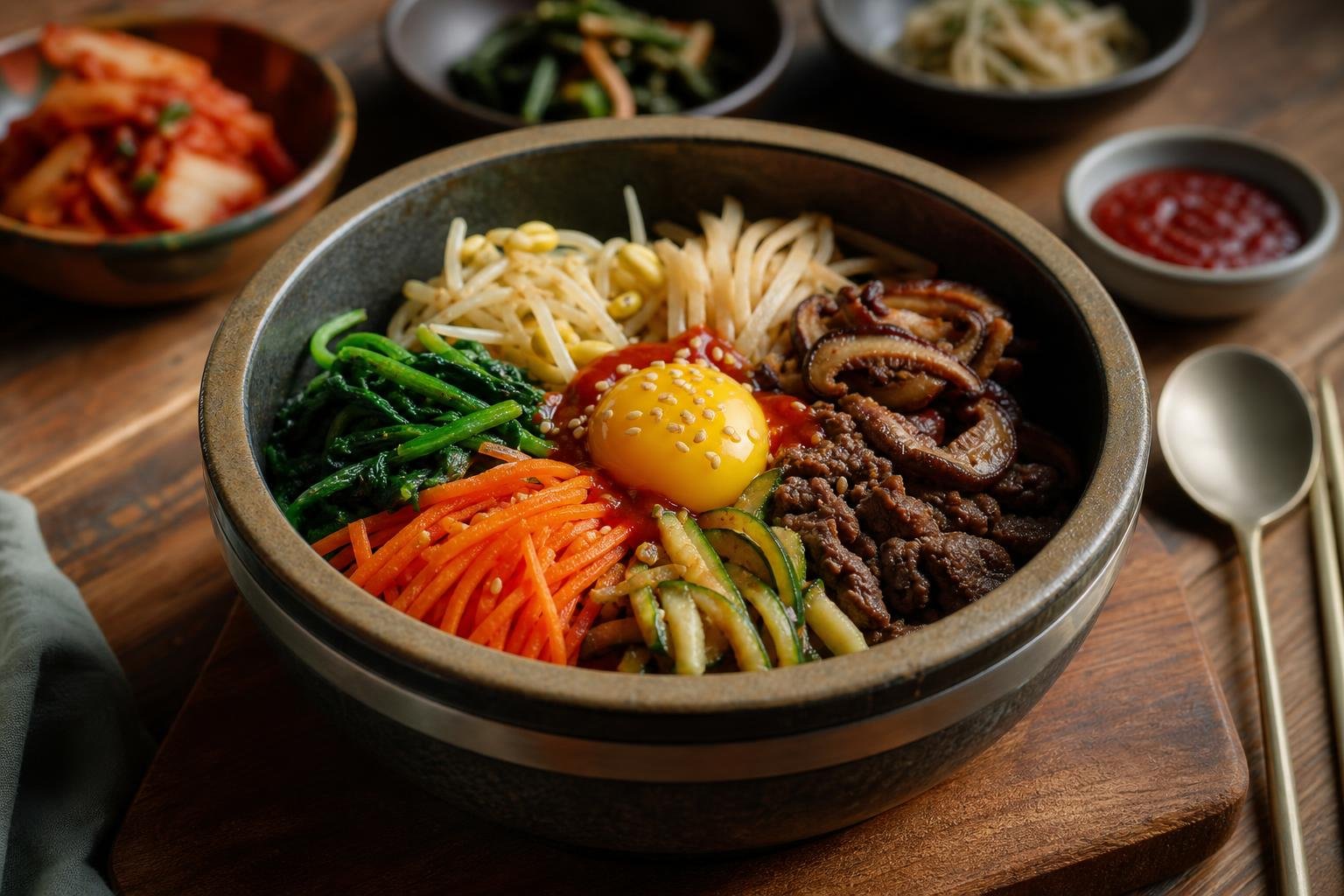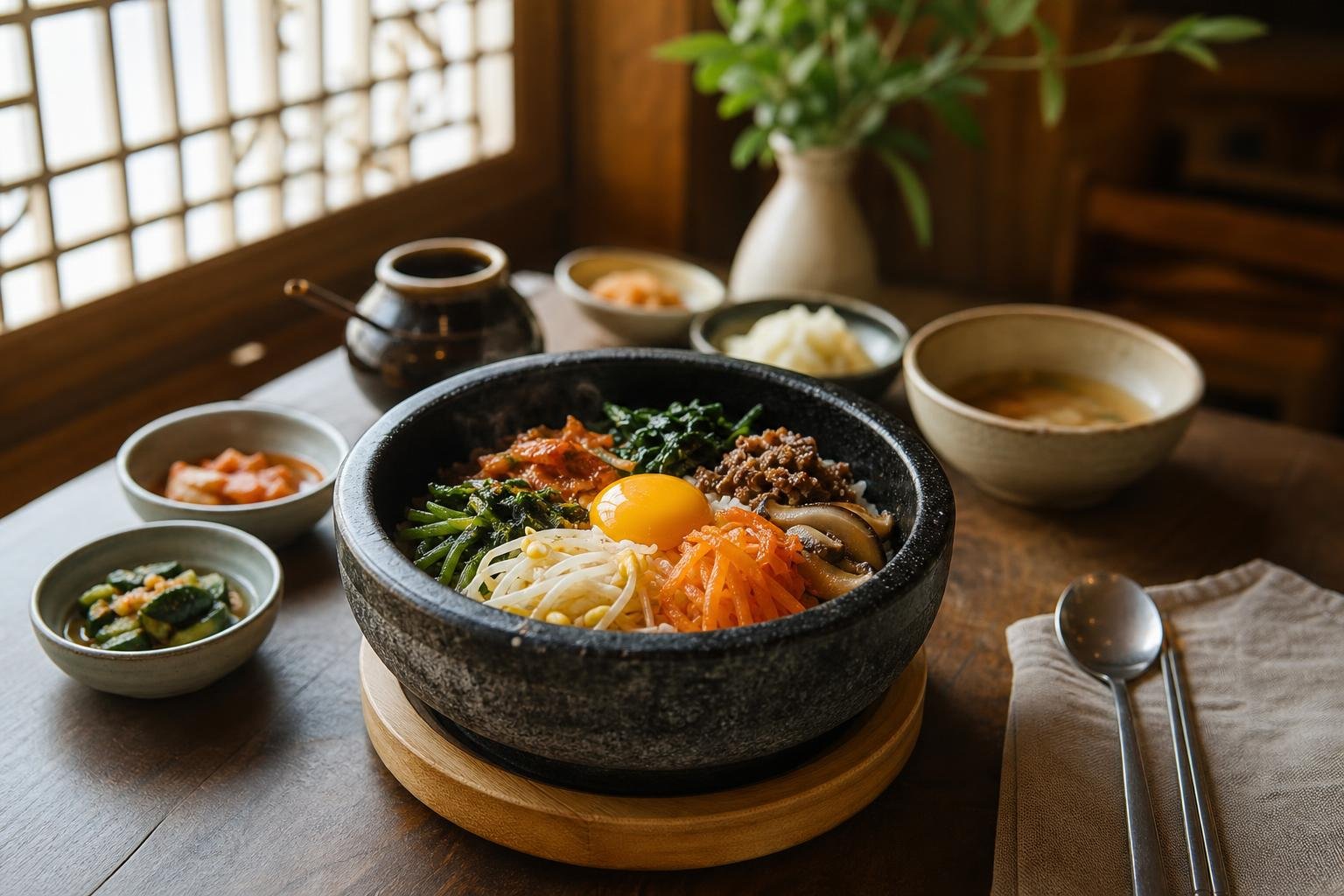
For a useful Korean bibimbap near me search, start with a map or delivery platform that can read your location, then open the restaurant’s current menu before relying on the result label. Search for both “bibimbap” and “비빔밥” if the platform accepts Korean, and try “dolsot bibimbap” or “stone bowl bibimbap” if a hot, crisp-bottomed rice bowl is the meal you have in mind. A Korean restaurant may appear nearby without offering the dish every day, while a restaurant with bibimbap in its name may list several very different versions.
Table of contents

Check distance, opening hours, service mode and the actual menu in that order. A close result is not much help if it has stopped taking orders, serves only lunch, or uses a delivery radius that does not reach you. Once the menu confirms bibimbap, look at the bowl description, protein choices, photographs and recent customer comments. That short sequence answers more than a star rating can: what is being sold, how it is served and what you will receive.
The supplied search research contains no directly relevant restaurant listings, local reviews, menu pages or verified evidence of a bibimbap-specific 2026 trend. It cannot support a claim that any restaurant is the best, nearest or most authentic option in a particular city. Local availability has to be checked where you are, at the moment you plan to order.
How to make a Korean bibimbap near me search more precise
“Near me” is a location instruction, not a cuisine category. Let your device supply the location, but give the search a little more detail. Add your neighborhood, a transit stop, a desired service – dine-in, pickup or delivery – or the style of bowl. Searching “dolsot bibimbap [neighborhood]” will normally produce a different pool of results from “bibimbap delivery [neighborhood].” That matters because the stone-bowl version travels less predictably than a standard rice bowl.
Do not stop at the first sponsored card or the platform’s top-ranked result. Paid placement can make a restaurant more visible; it does not confirm that a particular dish is in stock, well packed or served in the format you want. Open at least two or three menus. Look for a current ordering page rather than a years-old review, an undated photo or a menu uploaded by a customer.
- Confirm the dish name. Look for bibimbap, 비빔밥, dolsot bibimbap, 돌솥비빔밥, vegetable bibimbap or a named variation.
- Check the clock. Verify today’s hours and, for delivery, the restaurant’s current ordering window rather than its general business hours.
- Read the service notes. A restaurant can offer dine-in bibimbap but omit it from delivery, or package sauces and toppings separately.
- Compare the complete cost. The menu price, rice add-ons, delivery fee, service fee and minimum order can change the value of a single bowl.
- Use recent, dish-specific comments carefully. A review describing soggy rice after a long delivery is more relevant than a broad compliment about the restaurant’s barbecue.
Read the menu before deciding what kind of bowl you want

Bibimbap, written 비빔밥 in Korean, is a mixed-rice dish. The name points to its central action: ingredients are brought together with rice and mixed before eating. That simple description leaves substantial room for variation. A menu may present warm or room-temperature rice with seasoned vegetables, a fried or raw egg, meat, seafood, tofu or no designated protein, then provide gochujang – a fermented red-pepper paste – on the side or in the bowl.
The photograph can be misleading if it is treated as a fixed recipe. Toppings may be arranged in separate colored sections for presentation, but the diner is generally expected to mix them. The amount of sauce, the rice temperature, the vegetable selection and the protein are choices made by the restaurant. A bowl called “vegetable bibimbap” may still include egg; a menu description that says “spicy” may refer to the sauce rather than every component.
Read past attractive menu language and find the particulars. Does the listed protein come with the bowl or cost extra? Is egg included, optional or absent? Does the restaurant identify rice type? Is gochujang separate? Those details are often more useful than trying to infer quality from a generic image. If the menu gives too little information, a brief call or message before ordering is more reliable than guessing from a delivery-app thumbnail.
Regular bibimbap and dolsot bibimbap are not interchangeable
The menu distinction most likely to affect your meal is between regular bibimbap and dolsot bibimbap. Dolsot means stone pot, and dolsot bibimbap is brought in a heated bowl. The heat can continue cooking the rice at the bottom, creating a toasted, crisp layer if the bowl is left undisturbed briefly. It also keeps the dish hot longer at the table. A regular bowl does not promise that sizzling surface or that prolonged heat.
Neither format is automatically superior. A standard bowl can make sense for a quick lunch, for a diner who wants gentler textures, or for delivery. The heated version can be particularly satisfying when eaten promptly in the restaurant, where the server’s timing, the vessel’s heat and the fresh toppings arrive together. For takeout, the same qualities introduce trade-offs: steam can soften vegetables, crisp rice can lose texture, and a very hot container requires care.
If your search is driven by the image of rice crackling at the table, use “dolsot” rather than assuming every listing for bibimbap means a stone bowl. Conversely, do not dismiss a regular bowl as an inferior substitute. It is a distinct service style, and some restaurants may use their own English descriptions such as “hot pot,” “stone pot” or “sizzling bowl.” Read the menu wording and photographs together, then ask if the bowl type remains unclear.
What menu photos and reviews can actually tell you
Photos are best used to verify practical details. They may show a stone vessel, separately packed sauce, a runny egg yolk, a sizable portion of rice, or a selection of vegetables that differs from the written menu. They cannot reliably tell you how seasoning tastes, how long the food waited before being photographed, or whether a dish shown in an older post is still offered. Treat them as clues, not proof.
Review reading works better when it is narrowly targeted. Search within the review section for “bibimbap,” “dolsot,” “rice,” “vegetarian,” “delivery” or “takeout.” Prioritize recent comments that identify the dish and explain the situation: dining in at lunch, collecting a pickup order, or receiving a meal after a long delivery. A complaint about cold food has a different meaning when the restaurant is twenty minutes away than when it is across town.
Balance that detail against the restaurant’s own menu. Diners may use loose English names, confuse bibimbap with another rice dish, or post a photo from a special menu. The restaurant’s current ordering page is the better record of price and availability. Reviews are most valuable for patterns that menus cannot display: portion consistency, packaging, wait times and how staff handle requests.
Choose dine-in, pickup or delivery according to the bowl
Dine-in is usually the clearest way to experience a heated bibimbap bowl as intended, especially if you are trying dolsot for the first time. You can decide how much gochujang to add, mix at your own pace and eat while the vessel still holds heat. If a menu says the pot is hot, take that seriously: restaurants commonly provide it on a tray, but the bowl and its base can retain heat after it reaches the table.
Pickup is a useful middle ground. You can shorten the time food sits in a delivery bag and ask, where appropriate, for sauce or components to be packed separately. Check the pickup time rather than arriving early; rice and vegetables can change texture while waiting. Delivery is often the most convenient route, but it rewards a shorter distance and realistic expectations. Choose regular bibimbap if the restaurant’s packaging gives you more confidence, or order a dolsot version only after checking that it is offered for delivery and that you can eat it promptly.
For a group order, do not assume every person needs the same format. One diner may want a stone bowl, another may prefer a cooler mixed-rice bowl, and someone else may need ingredient changes. Separate selections on the order prevent a convenient group meal from becoming a series of last-minute substitutions.
Dietary questions need a restaurant answer, not a menu assumption

Bibimbap can look straightforwardly plant-forward because vegetables are prominent, but appearance is not an ingredient list. Egg, beef, pork, chicken, seafood, broth-based seasonings, fish-derived ingredients and shared cooking surfaces can all be relevant depending on the restaurant and the specific bowl. Gochujang and other sauces may also have ingredients that matter to diners managing allergens or gluten-related dietary needs.
Ask focused questions before placing the order. A vegetarian diner can ask whether the bowl contains meat, seafood, meat-based broth or fish-derived seasoning, and whether egg can be omitted. A vegan diner should ask the same questions while also confirming sauce and kitchen handling. Someone with an allergy should explain the allergen plainly, ask about cross-contact and decide based on the restaurant’s response rather than relying on a “vegetarian” filter alone.
Customization can alter the balance of a dish. Removing egg or protein may leave a bowl less filling; ordering extra tofu, mushrooms, vegetables or rice may be possible, but only if the menu lists the option or the restaurant confirms it. Requesting sauce on the side is often sensible for diners unsure about heat, sweetness or ingredients. It also lets first-time eaters build flavor gradually instead of mixing in more spice than they enjoy.
Keep the Korean context in view, not just the social-media image
Bibimbap’s visual appeal travels easily online: the neat arrangement of colorful vegetables, egg and rice creates a before-and-after moment when the bowl is mixed. International posts often spotlight the theatrical stone bowl, the crisp rice or the final swirl of red sauce. Those images can be inviting, but they can also turn one restaurant’s presentation into an expectation that every Korean meal or every bibimbap bowl should look identical.
The Korean name offers a better starting point than the viral image. Bibimbap is about mixed rice, not a fixed topping chart or a compulsory dramatic presentation. Korean-language menu terms can help a diner read what is being offered, but translation is not always one-to-one. “Stone bowl,” “hot pot” and “sizzling bowl” may be used differently in English; a restaurant’s own description and a direct question remain the useful checks.
For diners searching Korean bibimbap near me, participation can be as simple as ordering with enough information to enjoy the meal on its own terms. Pick the bowl style you want, confirm the ingredients you need, judge delivery suitability by distance, and let current local menus – not a recycled food clip – determine where you eat.
Sources and verification
- Korea is becoming one of the world's global healthcare hubs – BBC / Established publication (Jul 24, 2026)
- The Korea of 2026 is a lot different than the Korea of 2009 … – Facebook · Tastes SEOUL Good / Other search result
- A look inside North Korea in 2026: a country that feels like … – Instagram · moh_in_shenzhen / Other search result
- Did South Korea’s real life match its social media image? – TikTok · Rana Rashid 🇰🇷 / Other search result
- Korean fan culture isn't chaos, it's choreography. Thousands … – Instagram · thelinamayorga / Other search result
- [FULL] K-Culture Dive (2026-07-29) [K-Culture ON SITE … – Facebook · Arirang News / Other search result
- Being Korean comes with so many little things that make … – Instagram · speaker_leesk / Other search result
- From Turtle Chips to banana milk coffee: Korea's next must … – The Korea Times / Other search result (Aug 5, 2026)
Frequently Asked Questions
What is the difference between bibimbap and dolsot bibimbap?
Bibimbap is mixed rice with toppings that can vary by restaurant. Dolsot bibimbap is served in a heated stone pot, which may keep the bowl hot and crisp the bottom layer of rice. Check the restaurant's menu because English descriptions and service methods differ.
How can I find Korean bibimbap near me that is available now?
Use a location-enabled map or delivery app, then confirm the restaurant's live hours and current menu. Search both bibimbap and dolsot bibimbap if you want a heated bowl. Check delivery radius, pickup timing and whether the item is offered through your chosen service.
Is bibimbap vegetarian or vegan?
It can be, but the name alone does not guarantee it. A vegetable bowl may include egg, and sauces or seasonings can contain animal-derived ingredients. Ask the restaurant about protein, broth, seafood or fish-derived seasonings, sauce, shared preparation and possible ingredient substitutions before ordering.
Explore more K-culture stories
Editorial disclosure: Automated tools assisted with research and drafting. An editor reviewed the sources, factual claims, dates, and wording before publication. Time-sensitive details can change, so confirm them with the linked official sources.
RECOMMENDED SITE
Planning a trip to Korea?
Discover practical Korea travel guides, local tips and destination ideas at KoreaSpot.