
Header image: AI-generated editorial illustration; not a product photograph or documentary image.
For a quick Korean convenience-store meal, choose one main item, a side that adds a different texture, and a drink. The four combinations below give you a starting point at the shelf. Adjust them to what the branch has in stock, how hungry you are and how much spice you enjoy.
Four combinations you can adapt at the shelf
| Combination | Why it works | Check before paying |
|---|---|---|
| Cup noodles + triangle gimbap + water | A hot main and a separate rice side; easy to scale by appetite | Noodle preparation, rice filling and whether heating is advised |
| Dosirak lunch box + a small salad | A prepared main with a fresh-texture side | Use-by date, storage, dressing and microwave instructions |
| Sandwich + ready-to-eat egg + unsweetened tea | A portable option when there is no seat or hot-water station | Egg and sandwich refrigeration; sauce and allergen labels |
| Plain yogurt + fruit + a separately packed cereal topping | A cold breakfast assembled in a few minutes | Fruit preparation, dairy tolerance and topping ingredients |
Taste each part before mixing everything together. A noodle cup may already have enough sauce and heat; extra cheese or rice can change both the flavor and the size of the meal. Add a little at a time so you can stop when it tastes right to you.
Know the product categories
CU’s official product directory separates lunch boxes and rice-ball/gimbap products. Use those categories to recognize a dosirak (도시락, packed meal), samgak gimbap (삼각김밥, triangular filled rice wrapped with seaweed), and cup noodles. Filling and sauce matter more than the shape of the package.
Useful label words include 조리방법 (preparation method), 전자레인지 (microwave), 알레르기 (allergy), 보관방법 (storage method), and 소비기한 (use-by date). Use a translation aid for the full panel rather than assuming a photo reveals every ingredient. A vegetable-looking filling or soup can still contain animal ingredients.
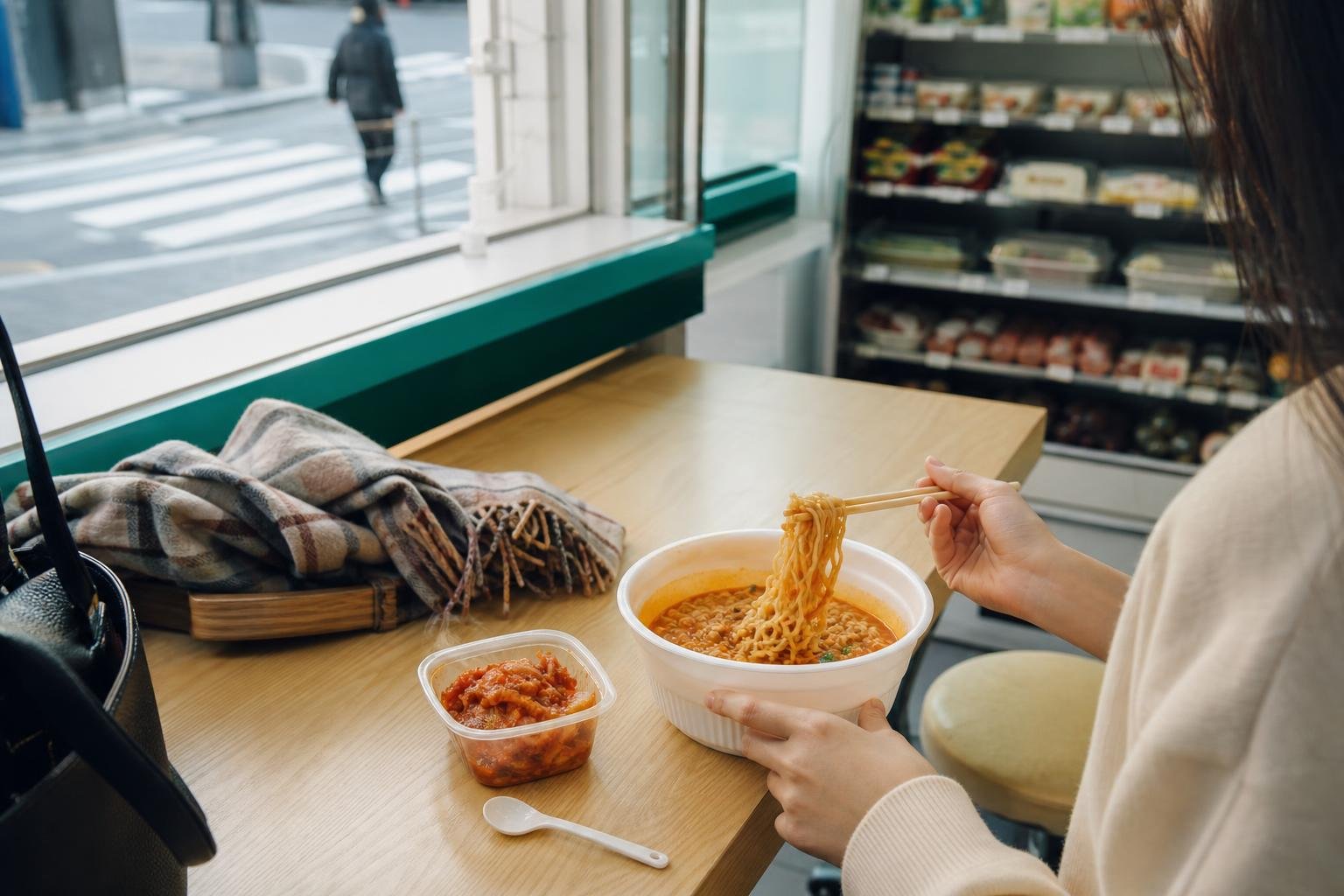
Follow the exact package, not another video
A concrete example shows why this matters: Nongshim’s Korean Shin Cup instructions specify boiling water to the marked line, 240 ml, followed by about three minutes. That particular cup is explicitly not microwave-compatible. Other products and overseas versions can have different directions.
Do not place a cup in a microwave because a similar-looking cup appeared in a clip. Check whether a lid, film or sachet must be removed, and follow the stated wattage and time. Ask staff where the equipment is and whether eating is permitted in that branch. Avoid adding raw meat or raw egg to an instant-noodle recipe unless the preparation method safely cooks it; ready-to-eat sides are simpler.
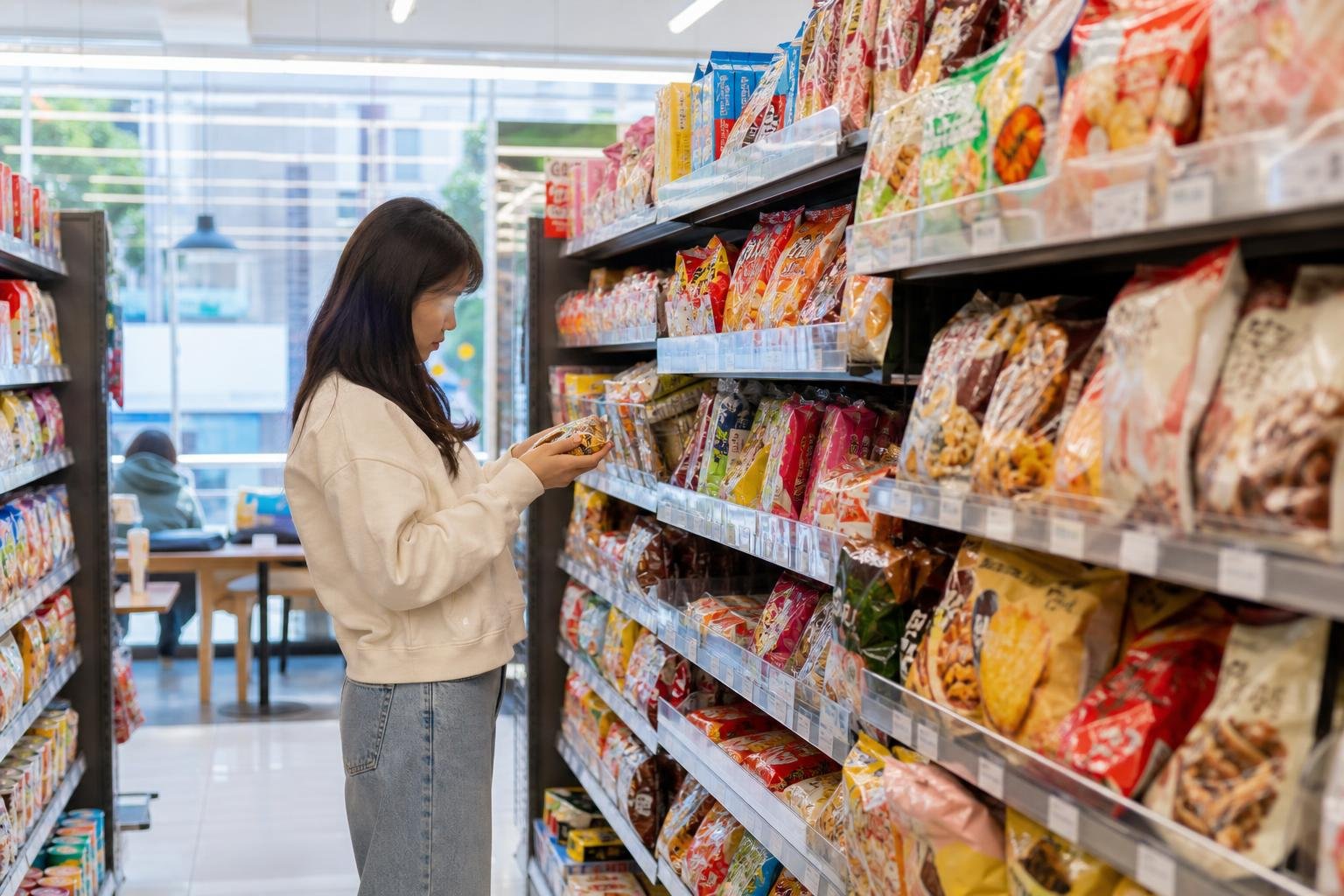
Budget and store etiquette
Add the actual shelf prices before deciding. A hypothetical ₩1,800 noodle cup, ₩1,500 rice item and ₩1,000 water total ₩4,300; those are arithmetic examples, not current store prices. A promotion is useful only if the exact items qualify and you want the extra quantity.
- Choose a main item and read its label.
- Add one side only if it fills a gap in appetite or texture.
- Pay before opening or preparing food unless staff direct otherwise.
- Use seating without blocking the counter or another customer.
- Sort containers, liquids and leftovers according to the branch’s signs.
If you would rather sit down for a meal, the bulgogi and bibimbap guides below explain what to look for on a restaurant menu.
Frequently asked questions
Are these the most viral Korean combinations?
No. These are meal ideas you can adapt, rather than a measured popularity list. Stock and promotions also vary by store.
Can every cup noodle be microwaved?
No. Read the exact package. The Korean Shin Cup referenced here prohibits microwave cooking.
Is triangle gimbap vegetarian?
Not automatically. Check the filling, seasoning and allergen panel, and ask about ingredients when uncertain.
Sources and verification
- CU official product directory — Product categories; branch inventory can vary.
- Nongshim Shin Cup instructions — Preparation and package-specific microwave restriction.